© THE TECHGEEKS EXPERIENCE 映 画 的 な

SPIRIT PCB CUM SUCTION CHASSIS - POWERFUL SUCTION DOWNFORCE - HIGH PERFORMANCE PCB - ROBOT CONTROLLER BOARD

MARK 2 LFR TITLE - TECHGEEKS
TECHGEEKS MARK 2 LINE FOLLOWING ROBOT HERO SHOT

SPIRIT PCB

(SPIRIT PCB CUM SUCTION CHASSIS)
by techgeeks
MARK 2 LINE FOLLOWING ROBOT TOP SHOT TRANSPARENT

Beyond a controller.

Beyond a chassis.

BRO THINKS HE'S A

BRO THINKS HE'S A

B-2 BOMBER

B-2 BOMBER

OVER 700 GRAMS OF

OVER 700 GRAMS OF

We replaced your chassis and

your controller with one flat,

engineered airframe. Everything

else is just software.

We replaced your chassis and

your controller with one flat,

engineered airframe. Everything

else is just software.

ACTIVE DOWNFORCE

ACTIVE DOWNFORCE

MARK 2 ADVANCED SUCTION LINE FOLLOWING ROBOT - HIGH SPEED FAST LFR BOT - PATH TRACER

product overview

(SPIRIT PCB CUM SUCTION CHASSIS)
about

DESCRIPTION

Explore the complete development ecosystem for Spirit PCB including code library, guides and learning resources below.

DESCRIPTION

Explore the complete development ecosystem for Spirit PCB including code library, guides and learning resources below.

Monolithic Airframe

Monolithic Airframe

TB6612FNG Compatible

TB6612FNG Compatible

PCB as Chassis

PCB as Chassis

GUIDED KIT

GUIDED KIT

SPIRIT STORY

SPIRIT STORY

We built this board for makers who want a suction LFR without the mechanical complexity of building one from scratch. Instead of designing an acrylic chassis, sourcing standoffs, running wires between a controller PCB and a structural frame, then bolting an impeller housing somewhere it fits,you start with one flat board that already does all of that. The PCB is the structure. The impeller is integrated. The SMD work is done.

MARK 2 LINE FOLLOWING ROBOT WITH DESIGN POSTERS AND MAGAZINE
MARK 2 LINE FOLLOWING ROBOT TECHGEEKS FLOATING SHOT

ABOUT PCB-CHASSIS

ABOUT LFR

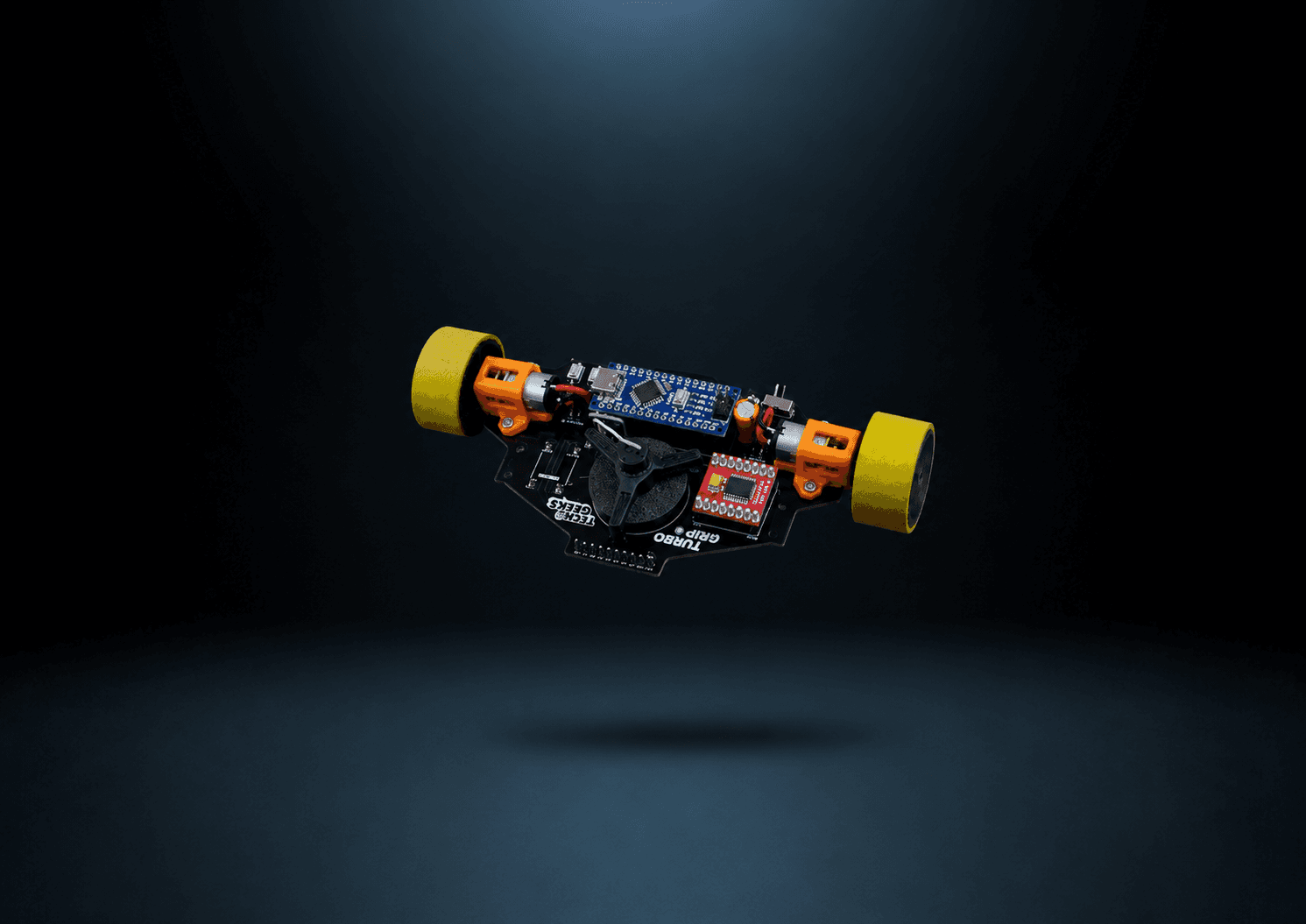
The Spirit PCB is a PCB-cum-chassis for suction line follower robots. The circuit board is the structural body. Motor mounts bolt directly to the board. The impeller system is mounted at center. There is no separate frame, no standoffs, no acrylic plate beneath it.

HARDWARE

◘ Embedded Systems

◘ Impeller Downforce Mechanics

◘ Sensor Integration

◘ Microcontroller

◘ PCB Designing

◘ SMD Peripherals

◘ Centrifugal Impeller

◘ Power Rail Architecture

SOFTWARE

◘ Bare metal C Programming

◘ Control Theory & PID

◘ Algorithm Designing

◘ PWM Frequency Optimization

◘ Parameter Tuning

◘ Low level optimization

◘ Timer Architecture

  • PCB-AS-CHASSIS ▪ PRE-SOLDERED SMD ▪ 4 COLORS AVAILABLE ▪ NO EXTERNAL FRAME ▪ LIGHTWEIGHT ▪ OPEN SOURCE HARDWARE PLATFORM ▪ FAST AF ▪ WITNESS THE PULL ▪

  • 4 COLORS AVAILABLE ▪ COMPACT FORM ▪ LIGHTWEIGHT ▪ OPEN SOURCE HARDWARE PLATFORM ▪

PRODUCT OVERVIEW
ABOUT

product features

(SPIRIT PCB CUM SUCTION CHASSIS)

usp

TECHGEEKS MARK 2 LINE FOLLOWING ROBOT TRANSPARENT SIDE ANGLE

Undeniable Advantages

Undeniable Advantages

STRUCTURAL

BALANCED

MONOLITHIC

BALANCED

INTEGRATED

PCB

BALANCED

AIRFRAME

BALANCED

ELECTRONICS

STRUCTURAL

BALANCED

MONOLITHIC

BALANCED

ACCURATE

IMPELLER

BALANCED

AIRFRAME

BALANCED

SENSORS

The PCB is the chassis. The chassis is the PCB.

5–6× its own weight in active grip.

Zero structural compromise at full speed.

The PCB is the chassis. The chassis is the PCB.

5–6× its own weight in active grip.

Zero structural compromise at full speed.

PRODUCT FEATURES
USP

SPIRIT PCB

PCB ROBOT CONTROLLER BOARD TECHGEEKS
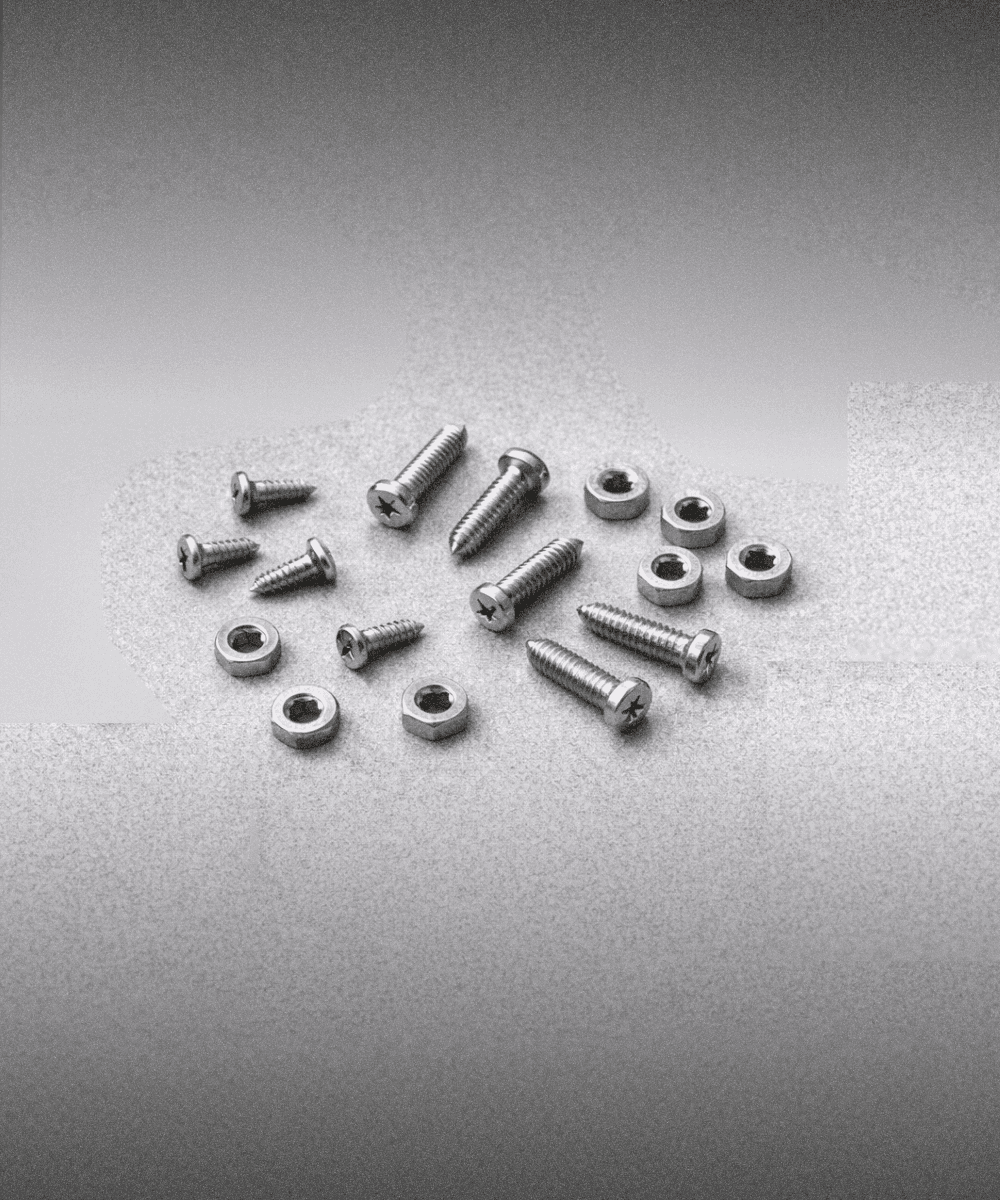
WIRES AND EXTRA ACCESSORIES TECHGEEKS

CABLES, SCREWS & FASTENERS

ACCESSORIES

PACKED KIT

WHAT'S INSIDE

THE BOX

WHAT'S INSIDE

THE BOX

Good things come in small packages, and inside of

this you will find everything you need to get your

line follower up and running. Both hardware and

software included.

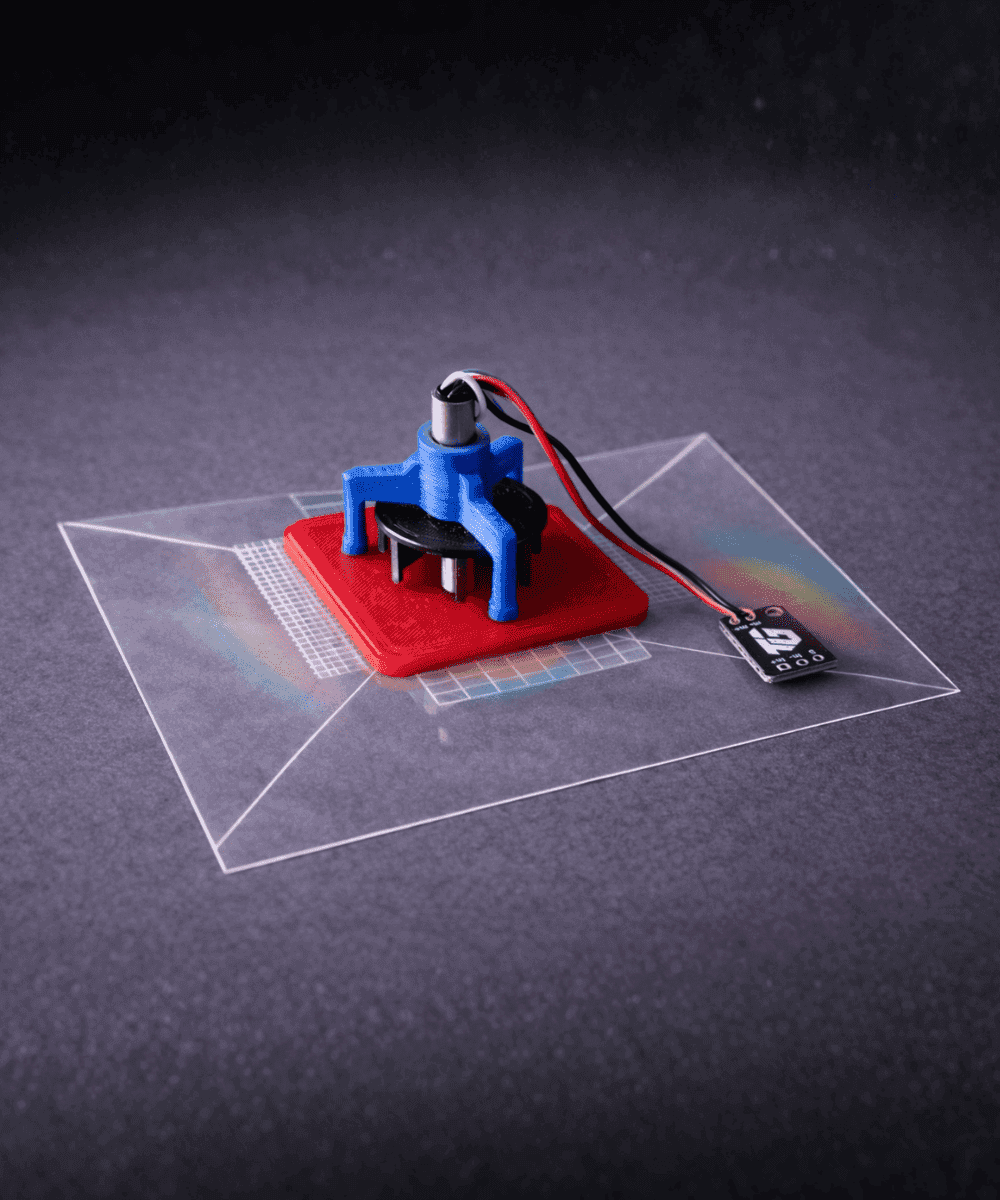
TECHGEEKS IMPELLER SETUP SUCTION

IMPELLER SETUP

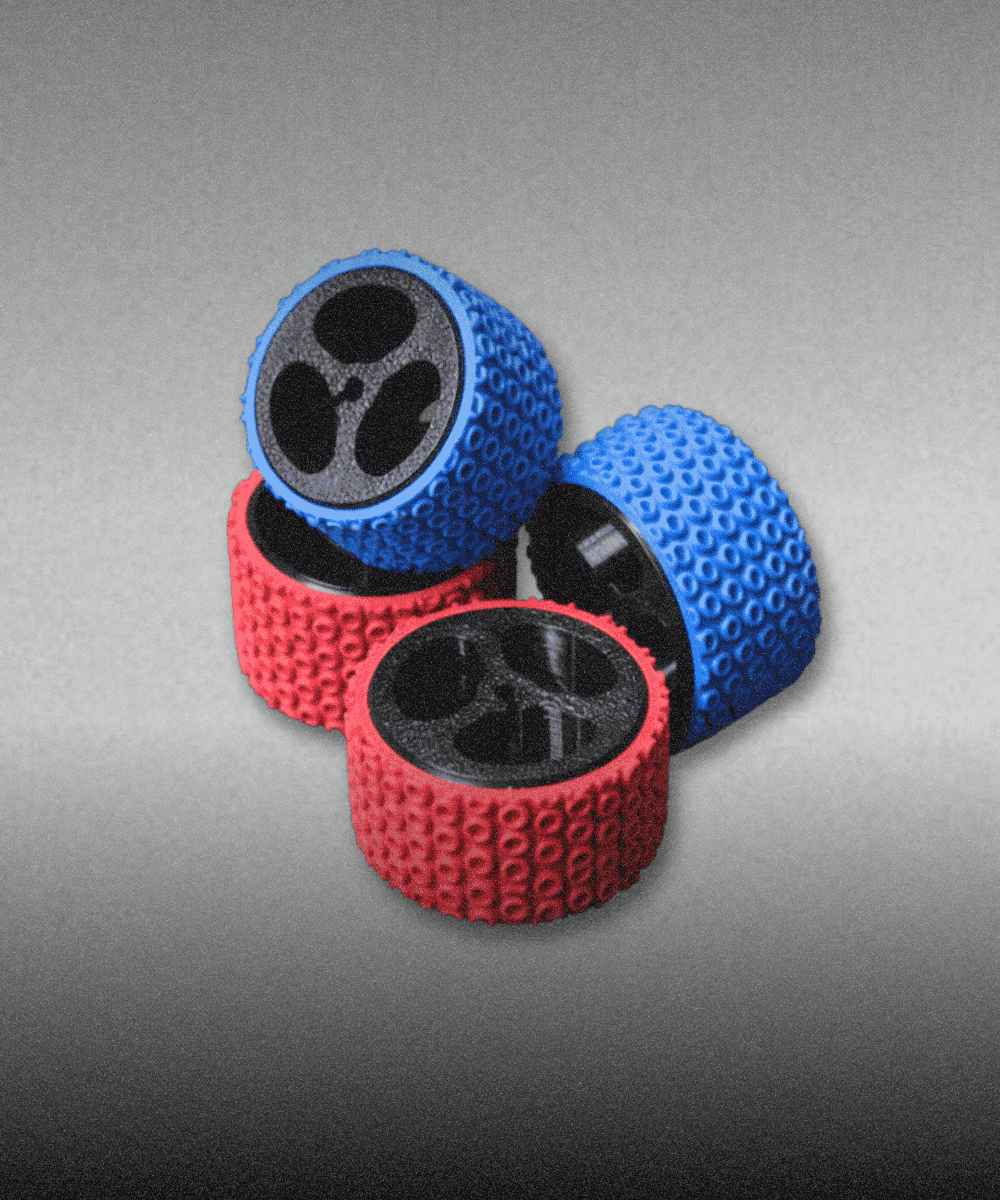
30mm x 15mm high-traction rubber wheels for Mark 2 line follower robot

HIGH TRACTION WHEELS x2

UNIVERSAL SPEED CONTROLLED TECHGEEKS FOR IMPELLER

UNIDIRECTIONAL SPEED CONTROLLER

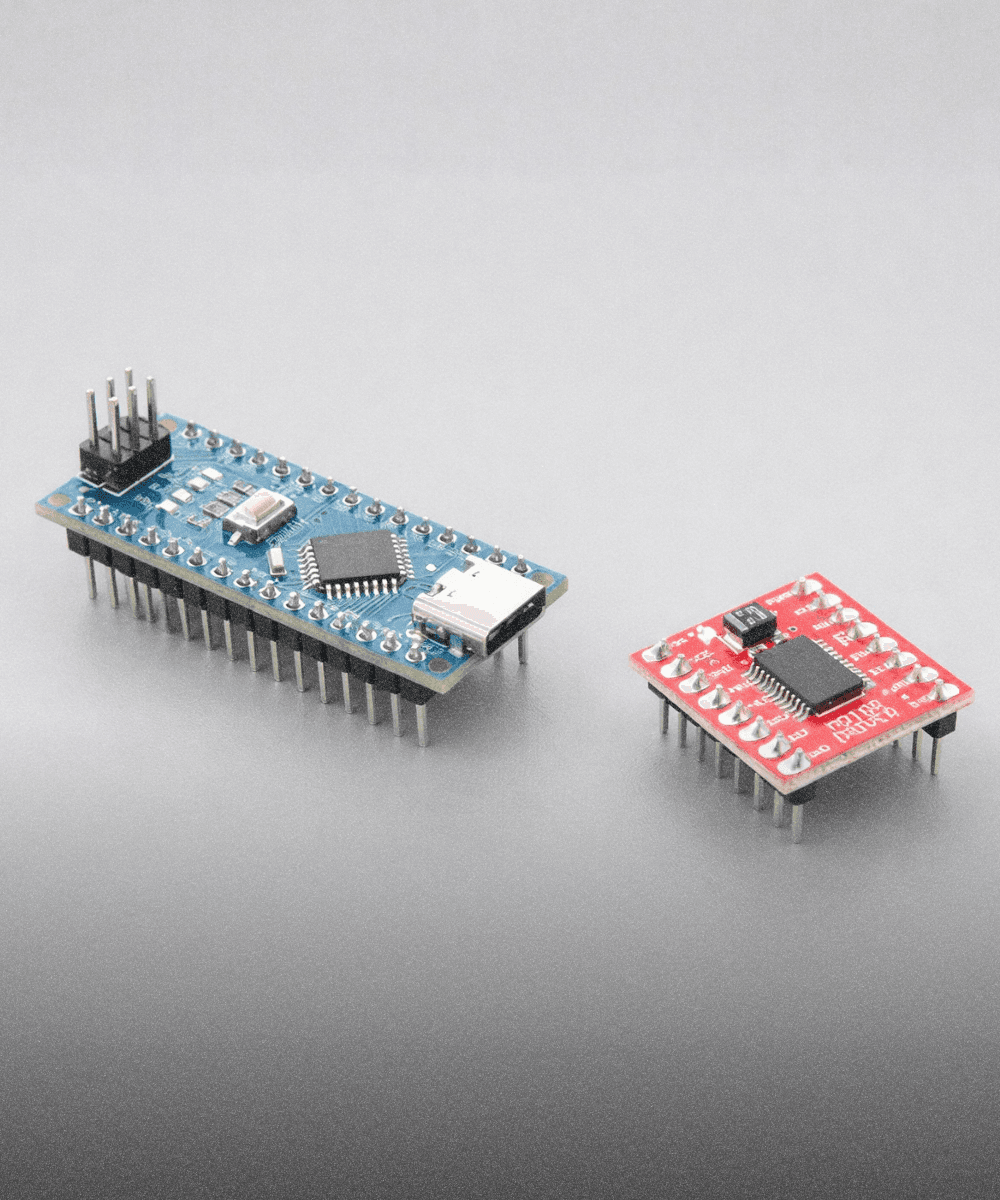
Arduino Nano Type-C – microcontroller for Mark 2 advanced suction LFR

ARDUINO NANO TYPE-C

product specs

(SPIRIT PCB CUM SUCTION CHASSIS)
description
Mark 2 LFR running at high speed on competition track CLOSEUP SHOTS

TECHNICAL

SPECIFICATIONS

TECHNICAL

SPECIFICATIONS

◘ The Spirit PCB is a monolithic, integrated PCB-cum-chassis designed to function simultaneously as the structural frame and the primary electronic platform of a high-speed suction line follower robot. By combining the airframe and robot controller into a single load-bearing PCB, it reduces overall mass, simplifies assembly and improves structural rigidity.


◘ The PCB supports an Arduino Nano (ATmega328P, 16 MHz, 5 V logic) and is configured with an onboard TB6612FNG dual H-bridge motor driver for standard N20 geared motors. User buttons, status LEDs, reverse-polarity protection, filter capacitors and supporting SMD circuitry are factory assembled, minimizing external wiring and simplifying system integration.


◘ Dedicated interfaces are provided for dual drive motors, an external impeller motor controller, an 8-channel analog sensor array, battery input and user peripherals. Independent logic, sensor and impeller power rails enable flexible power distribution while maintaining compatibility with high-speed suction line follower architectures.


◘ The PCB geometry is engineered for balanced mass distribution and structural efficiency. The impeller is positioned near the geometric center of the platform, motor mounts are integrated directly into the board, and the overall airframe minimizes unnecessary mass while maintaining the rigidity required for high-speed operation.

SOFTWARE AND PROCESSING

◘ The Spirit PCB is built as an open, programmable embedded platform optimized for real-time robotics applications. It provides developers with direct access to the ATmega328P microcontroller resources, enabling implementation of custom firmware for sensing, motion control and peripheral management.


Developers can implement PID control, state-machine architectures, interrupt-driven routines and other embedded control algorithms according to application requirements. The platform supports both Arduino framework development and direct AVR register programming, allowing high-level application code to be combined with low-level hardware control where required.


◘ Hardware PWM, ADC and timer peripherals support deterministic motor control, stable analog sensor acquisition and precise timing operations. Time-critical functions may directly access the microcontroller registers, while the remaining application can continue using standard Arduino libraries.


◘ Whether developing educational projects, research prototypes or competition robots, the Spirit PCB provides a flexible hardware foundation for real-time embedded applications and custom robotics firmware.

COLOR, MATTE

AND FINISH

Available in four color options for mounts and impeller, the pcb features a precision 3D-printed components & high-traction rubber wheels and cleanly integrated components, delivering a cohesive, durable, and competition-ready finish. *All the media present are for visual representation purposes only, actual product may vary.

MARK 2 LINE FOLLOWING ROBOT OUTLINE
product specs
description

Specifications.

MARK 2 LINE FOLLOWING ROBOT ON TRACK LFR

Hardware Specs

Impeller Setup

2S 8520 coreless motor + 30 mm impeller + USC

Compatible Motors

N20 brushed DC gear motors

PCB cum Chassis

Suction compatible + lightweight, PLA+ / PETG

Voltage Support Range

6 - 14 Volts

Analog Peripheral Rail

A0 - A7

MCU & Driver

Arduino nano @16MHz & Single TB6612FNG (dual channel)

Hardware Specs

Impeller Setup

2S 8520 coreless motor + 30 mm impeller + USC

Compatible Motors

N20 brushed DC gear motors

PCB cum Chassis

Suction compatible + lightweight, PLA+ / PETG

Voltage Support Range

6 - 14 Volts

Analog Peripheral Rail

A0 - A7

MCU & Driver

Arduino nano @16MHz & Single TB6612FNG (dual channel)

*All the specifications listed are retrieved from relevant sources and are subject to vary

*All the specifications listed are retrieved from relevant sources and are subject to vary

Power & Energy

Sensor

5V — via Arduino Nano 5V pin (X Pad shorted) or dedicated 5V 3A BEC

Impeller Motor

8520 coreless, 2S rated, ~2A peak @3V

Power Source De-Coupling

On-board capacitors for smooth power delivery

Impeller Rail

Battery voltage direct (Y Pad shorted) or regulated 5V 3A BEC

Safety

Reverse voltage protection + undervolt shutdown

X Pad

Bridges Nano 5V → logic rail (short for ARC-8 / low-current sensors)

Y Pad

Bridges battery → impeller rail (short for 2S use with 8520 motor)

Power & Energy

Sensor

5V — via Arduino Nano 5V pin (X Pad shorted) or dedicated 5V 3A BEC

Impeller Motor

8520 coreless, 2S rated, ~2A peak @3V

Power Source De-Coupling

On-board capacitors for smooth power delivery

Impeller Rail

Battery voltage direct (Y Pad shorted) or regulated 5V 3A BEC

Safety

Reverse voltage protection + undervolt shutdown

*The circuitry and components are powered with a compact and powerful Li-Po battery. The battery capacity rating is subject to vary according to available stock, check hardware specs for available options. Li-Po batteries pose accidental risks, please refer to the 'Battery Safety Guide' for safe usage.

*The circuitry and components are powered with a compact and powerful Li-Po battery. The battery capacity rating is subject to vary according to available stock, check hardware specs for available options. Li-Po batteries pose accidental risks, please refer to the 'Battery Safety Guide' for safe usage.

Weight & Dimension

Target Weight of Complete LFR

~120g

Impeller

30mm radial

Spirit PCB

72 mm L x 120 mm B

Wheels

30 mm diameter x 20 mm length ± 10%

Weight & Dimension

Target Weight of Complete LFR

~120g

Impeller

30mm radial

Spirit PCB

72 mm L x 120 mm B

Wheels

30 mm diameter x 20 mm length ± 10%

*The length between wheels and sensor is adjustable to fine tune the performance. Overall dimensions lie well within the safe limits for various competitions.

*The length between wheels and sensor is adjustable to fine tune the performance. Overall dimensions lie well within the safe limits for various competitions.

how it works

(SPIRIT PCB CUM SUCTION CHASSIS)
guided kits
Mark 2 LFR kit assembly guide step 2
Mark 2 LFR kit assembly guide step 3
Mark 2 LFR kit assembly guide step 4
hOW IT WORKS?
GUIDED KITS
Man Side Pose
Woman Sofa
Pool Area

SCIENCE BEHIND THE BOT

(SPIRIT PCB CUM SUCTION CHASSIS)
GROW

WHAT'S TO LEARN

WHAT'S TO LEARN

MARK 2 LINE FOLLOWING ROBOT CLOSEUP SHOT

01

PCB Design as Structural Engineering

Understand how a PCB can replace a mechanical chassis — how trace routing, mounting hole placement, and board geometry define structural behavior, not just electrical behavior. The Spirit PCB is a case study in hardware integration.

02

Timer Architecture & PWM at Register Level

Go beyond analogWrite(). Learn how hardware timers work at the ATmega328P register level — TCCR, OCR, DDR, PORT. Understand why timer sharing (Model 1's DRV8874 + impeller conflict) forces a different software approach and why that approach is actually faster and more reliable.

03

Power Architecture & Rail Isolation

Learn how independent power rails prevent interference between logic, sensor, and high-current motor circuits — and how solder-pad configuration lets you adapt to different battery and sensor setups.

04

Downforce Physics & Impeller Design

Understand how centrifugal impellers create low-pressure zones, how atmospheric pressure generates downforce, and how skirt geometry determines vacuum seal efficiency and how downforce changes the physics of cornering for a robot.

PCB Design as Structural Engineering

Understand how a PCB can replace a mechanical chassis — how trace routing, mounting hole placement, and board geometry define structural behavior, not just electrical behavior. The Spirit PCB is a case study in hardware integration.

Timer Architecture & PWM at Register Level

Go beyond analogWrite(). Learn how hardware timers work at the ATmega328P register level — TCCR, OCR, DDR, PORT. Understand why timer sharing (Model 1's DRV8874 + impeller conflict) forces a different software approach and why that approach is actually faster and more reliable.

Power Architecture & Rail Isolation

Learn how independent power rails prevent interference between logic, sensor, and high-current motor circuits — and how solder-pad configuration lets you adapt to different battery and sensor setups.

Downforce Physics & Impeller Design

Understand how centrifugal impellers create low-pressure zones, how atmospheric pressure generates downforce, and how skirt geometry determines vacuum seal efficiency and how downforce changes the physics of cornering for a robot.

science behind lfr
grow
© THE TECHGEEKS EXPERIENCE 映 画 的 な
(SPIRIT PCB CUM SUCTION CHASSIS)

user insights & reviews

product specs
description

Reviews (0)

FAQS

(SPIRIT PCB CUM SUCTION CHASSIS)
GOT MORE QUESTIONS?
LINE FOLLOWING ROBOT

Clarifying doubts
Before your journey Begins with
Real Process.

01

What is the Spirit PCB?

02

What RPM N20 motors should I use?

03

What is the X Pad and Y Pad?

04

Is the Spirit suitable for competitions?

05

What is Techgeeks?

06

Do you offer support after purchase?

07

Do you ship across India?

08

How long does delivery take?

09

Do you ship internationally / overseas?

faqS
GOT MORE QUESTIONS?

why choose us

brand

At Techgeeks, we believe that great innovation starts with right people and reliable tools. We are committed to delivering the highest quality hardware to ensure nothing stands between you and your creation. 

Thank you for choosing us to fuel your curiosity. Cheers to building the future.

Spirit PCB cum Chassis — Competition-Grade PCB-as-Chassis for Engineers | TechGeeks India

The TechGeeks Spirit PCB is a fully integrated PCB-cum-chassis suction line follower robot board designed for high-speed competitive robotics. Unlike conventional line followers that use a separate chassis and controller board, the Spirit uses the PCB itself as the structural frame. Motor mounts attach directly to the board, making it a single rigid, lightweight airframe optimized for performance.

All SMD peripherals — including reverse-polarity protection diodes, filter capacitors, status LEDs, and tactile buttons — come pre-soldered. The user installs the Arduino Nano, motor driver(s), sensor array, and driving motors to complete the controller. The Spirit includes a complete active downforce system: an 8520 coreless brushed DC impeller motor, a 30mm radial impeller, a unidirectional MOSFET-based speed controller (USC), and a custom vacuum skirt. At operating speed with the skirt sealed, the Spirit generates over 700g of active downforce — pressing the robot onto the track with 5 to 6 times its own weight, translating directly to wheel grip that standard LFR designs cannot match at high speed. Full open-source firmware, pin documentation, power architecture diagrams, and a comprehensive build guide are available in the Spirit PCB Manual and TechGeeks GitHub repository. The Spirit PCB ships across India with free delivery on orders above ₹1999. If you're looking for a suction line follower PCB in India that combines structural engineering, active downforce physics, and bare-metal embedded programming into one platform, the Spirit PCB is built for exactly that.

centrifugal impeller robot, 8520 coreless motor robot, downforce autonomous robot, bare metal C robotics, Arduino robot firmware, register level PWM robot, 3S LiPo competition robot, suction chassis line follower, speed maxing robotics India

At Techgeeks, we believe that great innovation starts with right people and reliable tools. We are committed to delivering the highest quality hardware to ensure nothing stands between you and your creation. 

Thank you for choosing us to fuel your curiosity. Cheers to building the future.

Spirit PCB cum Chassis — Competition-Grade PCB-as-Chassis for Engineers | TechGeeks India

The TechGeeks Spirit PCB is a fully integrated PCB-cum-chassis suction line follower robot board designed for high-speed competitive robotics. Unlike conventional line followers that use a separate chassis and controller board, the Spirit uses the PCB itself as the structural frame. Motor mounts attach directly to the board, making it a single rigid, lightweight airframe optimized for performance.

All SMD peripherals — including reverse-polarity protection diodes, filter capacitors, status LEDs, and tactile buttons — come pre-soldered. The user installs the Arduino Nano, motor driver(s), sensor array, and driving motors to complete the controller. The Spirit includes a complete active downforce system: an 8520 coreless brushed DC impeller motor, a 30mm radial impeller, a unidirectional MOSFET-based speed controller (USC), and a custom vacuum skirt. At operating speed with the skirt sealed, the Spirit generates over 700g of active downforce — pressing the robot onto the track with 5 to 6 times its own weight, translating directly to wheel grip that standard LFR designs cannot match at high speed. Full open-source firmware, pin documentation, power architecture diagrams, and a comprehensive build guide are available in the Spirit PCB Manual and TechGeeks GitHub repository. The Spirit PCB ships across India with free delivery on orders above ₹1999. If you're looking for a suction line follower PCB in India that combines structural engineering, active downforce physics, and bare-metal embedded programming into one platform, the Spirit PCB is built for exactly that.

centrifugal impeller robot, 8520 coreless motor robot, downforce autonomous robot, bare metal C robotics, Arduino robot firmware, register level PWM robot, 3S LiPo competition robot, suction chassis line follower, speed maxing robotics India

why choose us
brand
FIN.
(SPIRIT PCB CUM SUCTION CHASSIS)
PEACE OUT
MARK 2 LINE FOLLOWING ROBOT OUTLINE IMAGE
fin.
peace out
140100
Select Color
Select Assembly
UNASSEMBLED KIT
PREMADE BOT

DIY KIT

Build the bot from scratch with the parts included. (soldering iron, fasteners, wires may be needed)

PREMADE BOT

Receive a ready to run robot, assembled before dispatch. (battery charger, tools may be needed)

Close