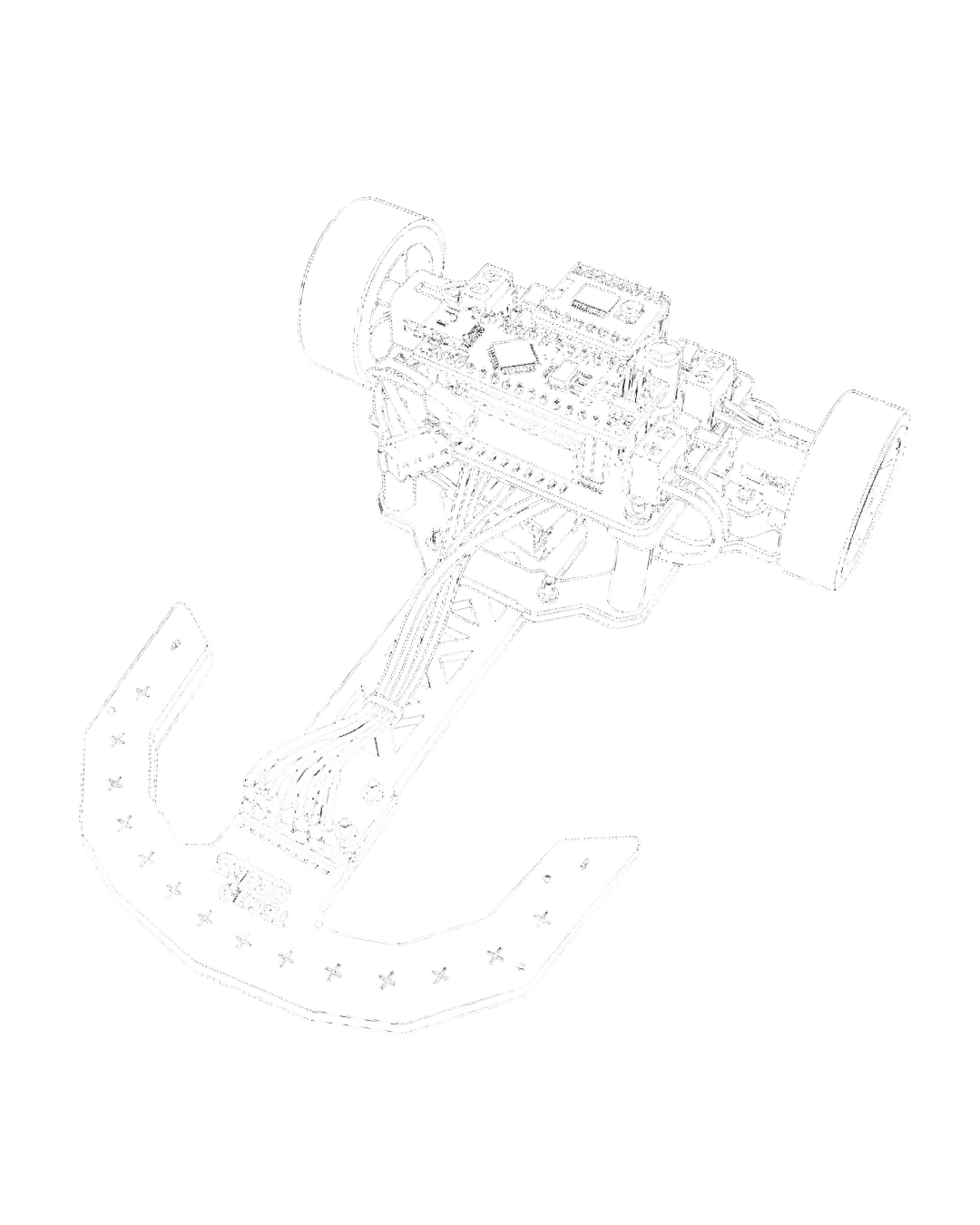



MARK-X STORY
Complexity is not a problem, it's a playground. The Mark-X is the robot you reach for when the track designers are trying to stop you. Acute angles, circular loops, square junctions, discontinuous gaps, U-turns, jagged zigzags, track inversions. Every scenario has a pre-coded counter-move built into the firmware. Develop solutions for complexities that other bots blank out on.


The Mark-X sits where algorithm design meets hardware precision. A 16 channel ARC-16 sensor array gives the robot 2D spatial awareness of the track, not just left or right, but the full pattern spread across 16 positions simultaneously. A state machine firmware built on top of a PD controller means the robot doesn't just react, it decides. Whether you're learning state machine design for the first time or competing at Techfest with a fully custom firmware, the Mark-X scales with how deep you want to go.
HARDWARE
◘ Embedded Systems
◘ Sensor Integration
◘ Microcontroller
◘ PCB Designing
◘ SMD Peripherals
◘ Power Rail Architecture
◘ 3D and CAD
◘ Multiplexed Sensing
SOFTWARE
◘ C Programming
◘ State Machines
◘ Control Theory & PID
◘ Algorithm Designing
◘ Parameter Tuning
◘ Case Handling and Pattern Recognition


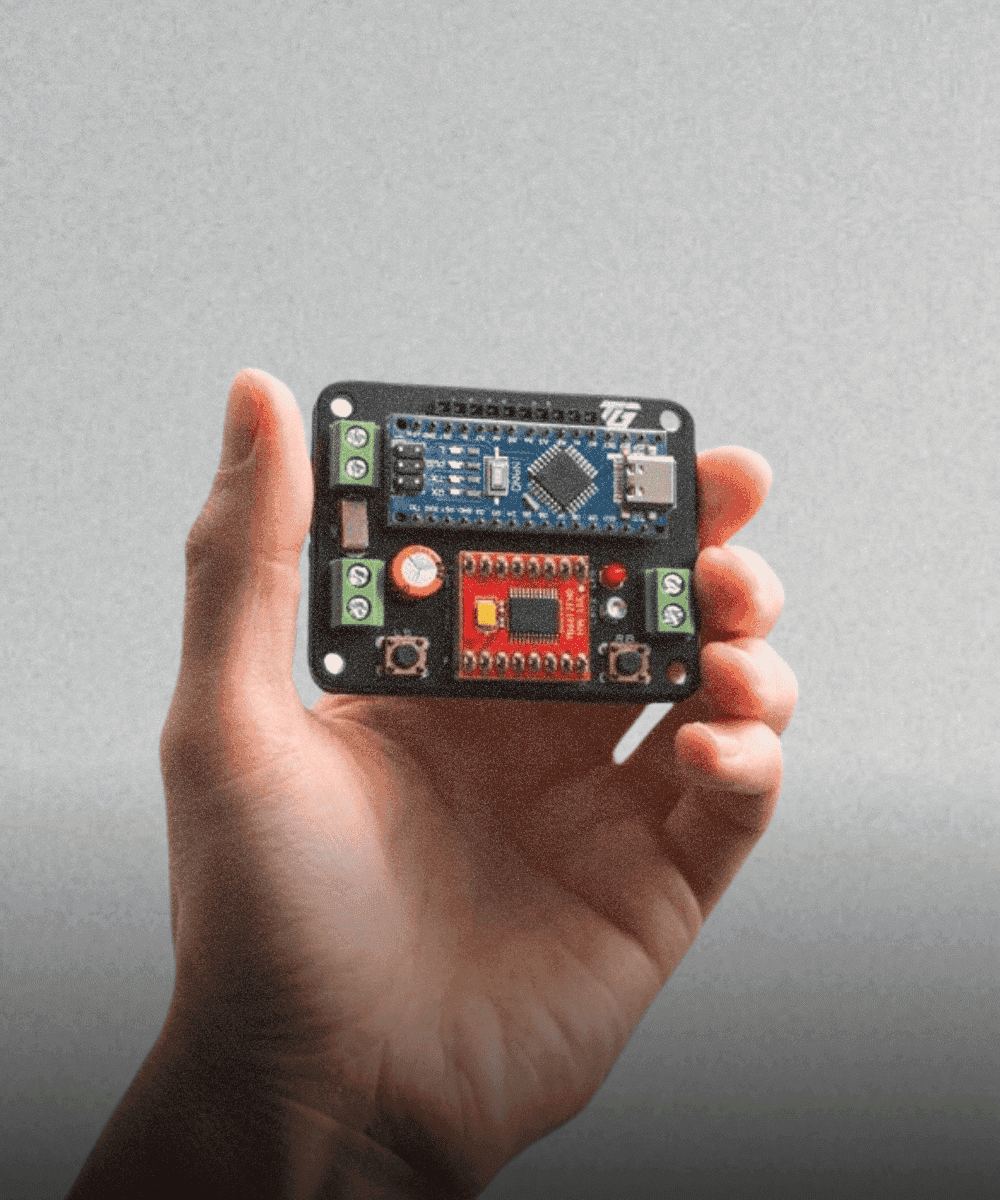
ROBOT CONTROL BOARD

16 CHANNEL IR ARRAY x1
ACCESSORIES
PACKED KIT
Good things come in small packages, and inside of
this you will find everything you need to get your
line follower up and running. Both hardware and
software included.



3D PRINTED CHASSIS
COMPACT Li-Po BATTERY
HIGH TRACTION WHEELS x2


CABLES, SCREWS & FASTENERS
COMPREHENSIVE GUIDE

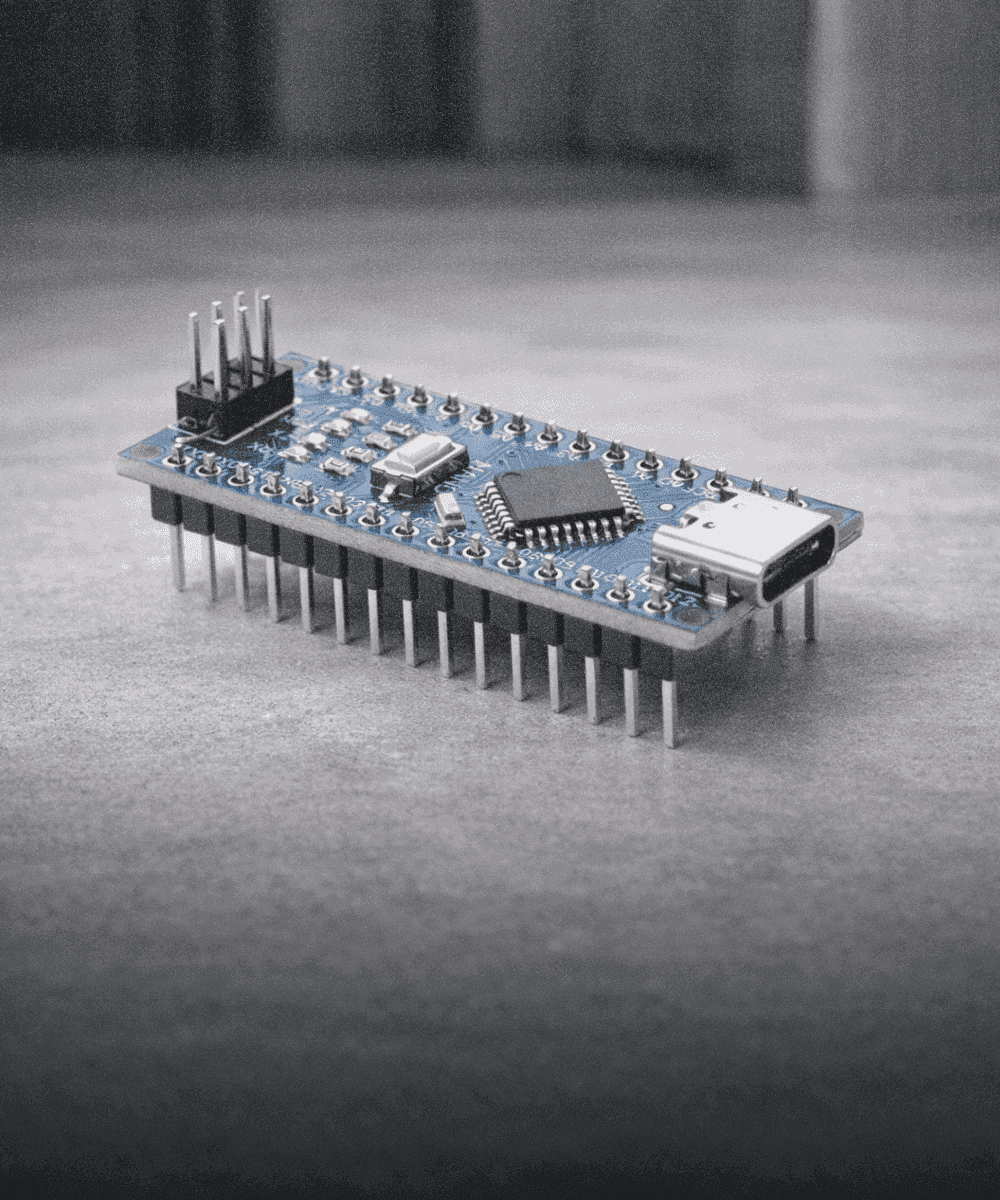
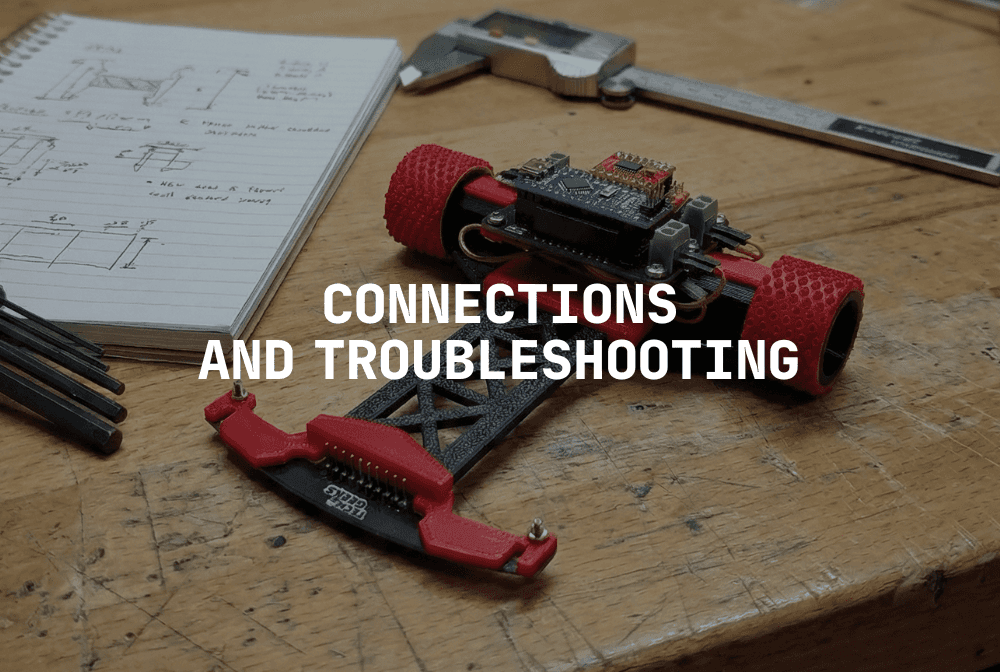
◘ The Mark-X is a complex-track-capable competition line follower built around the ATmega328P microcontroller via Arduino Nano, running at 16 MHz with 5V logic. It is designed to solve competition track elements that standard single-axis followers fail on: acute angle branches, circular loops, square junctions, discontinuous lines, U-turns, jagged zigzags, and track inversions.
◘ Sensing is handled by the ARC-16 - TechGeeks' 16 channel curved analog IR sensor array. All 16 channels read through a single multiplexer chip using 4 selector pins and one shared analog input, sampling at 10 KHz for noise-free readings. Input: 5V DC at ~310 mA. Output: analog 0–VCC. The curved geometry provides 2-dimensional spatial coverage of the track width.
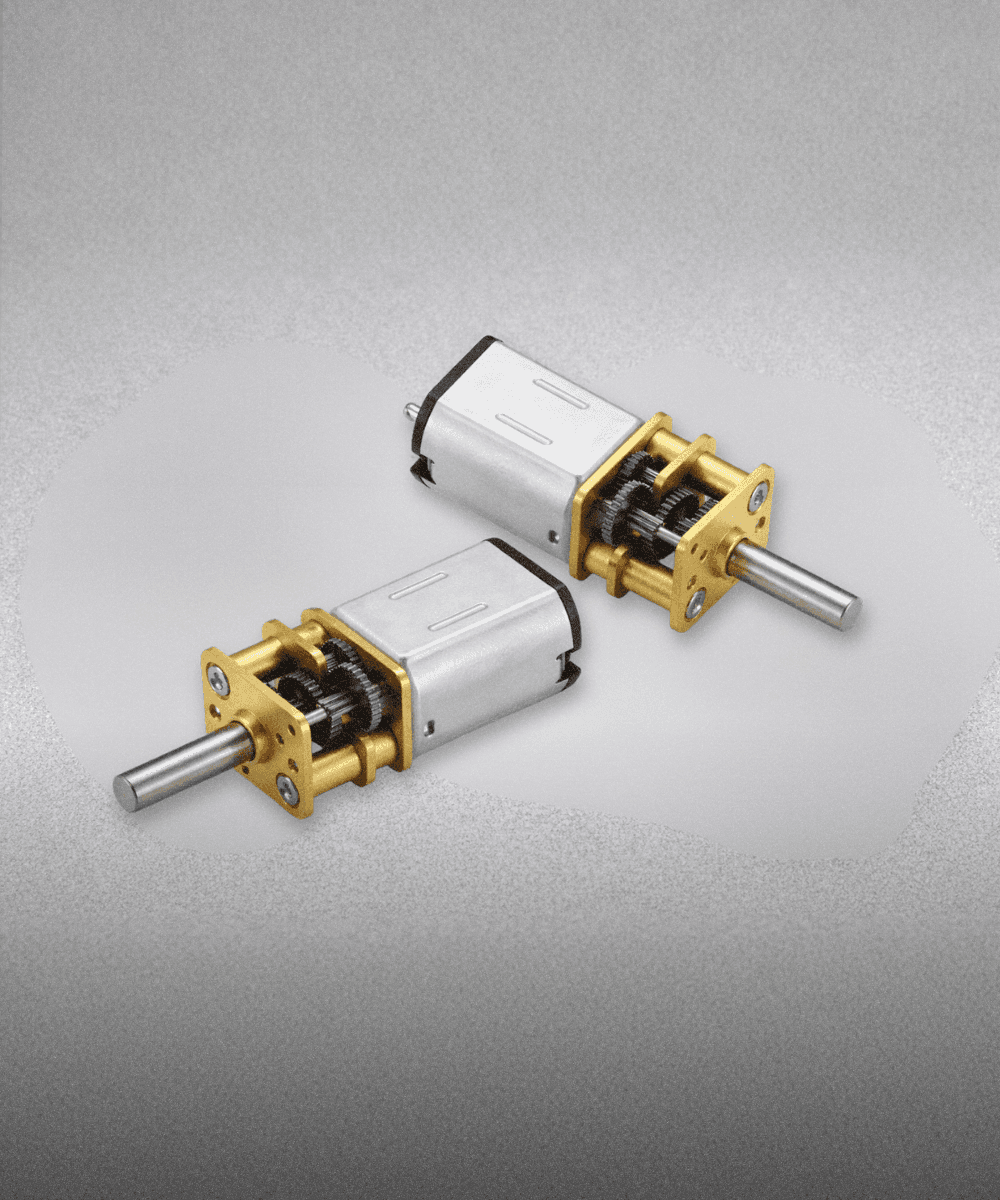
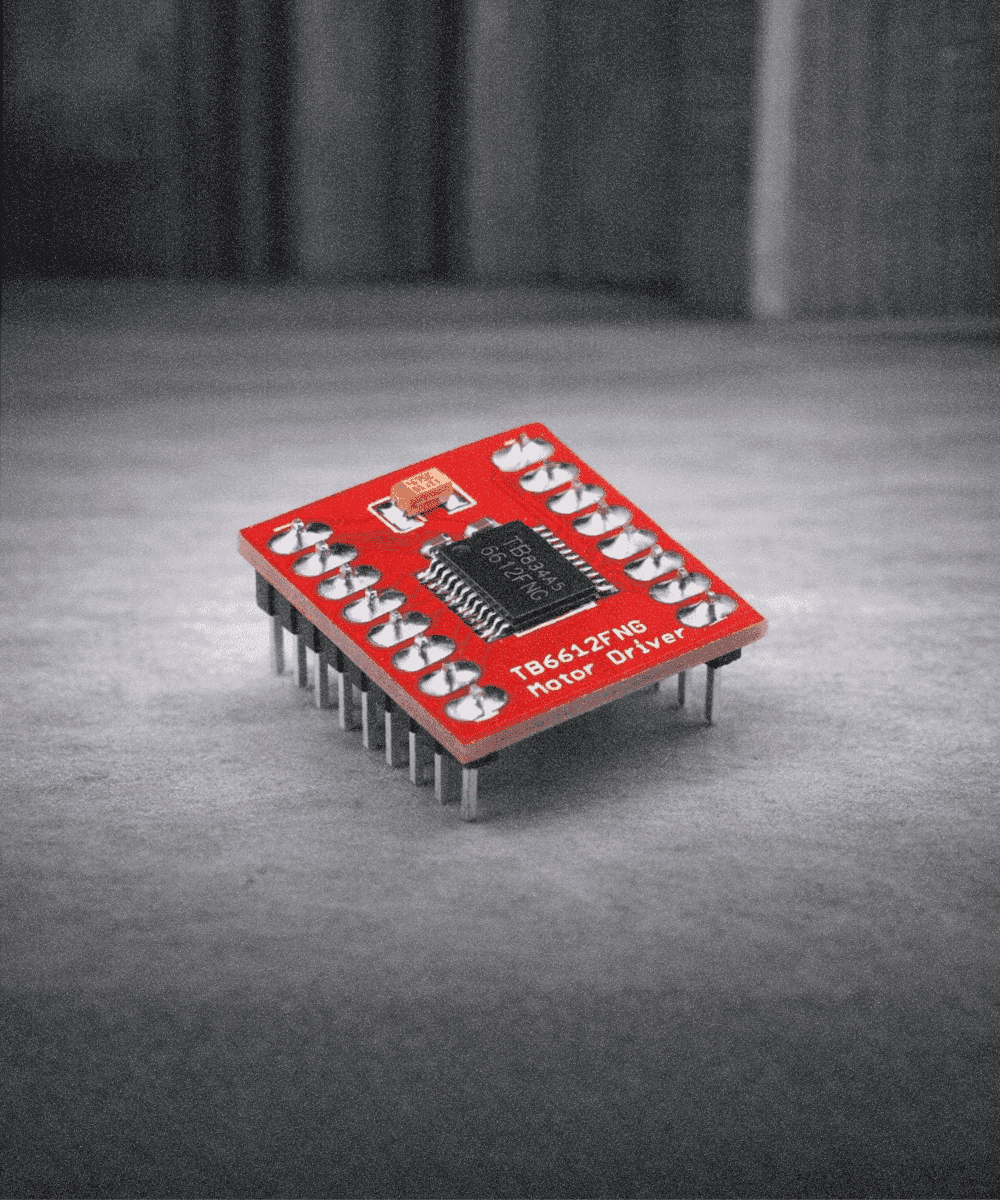
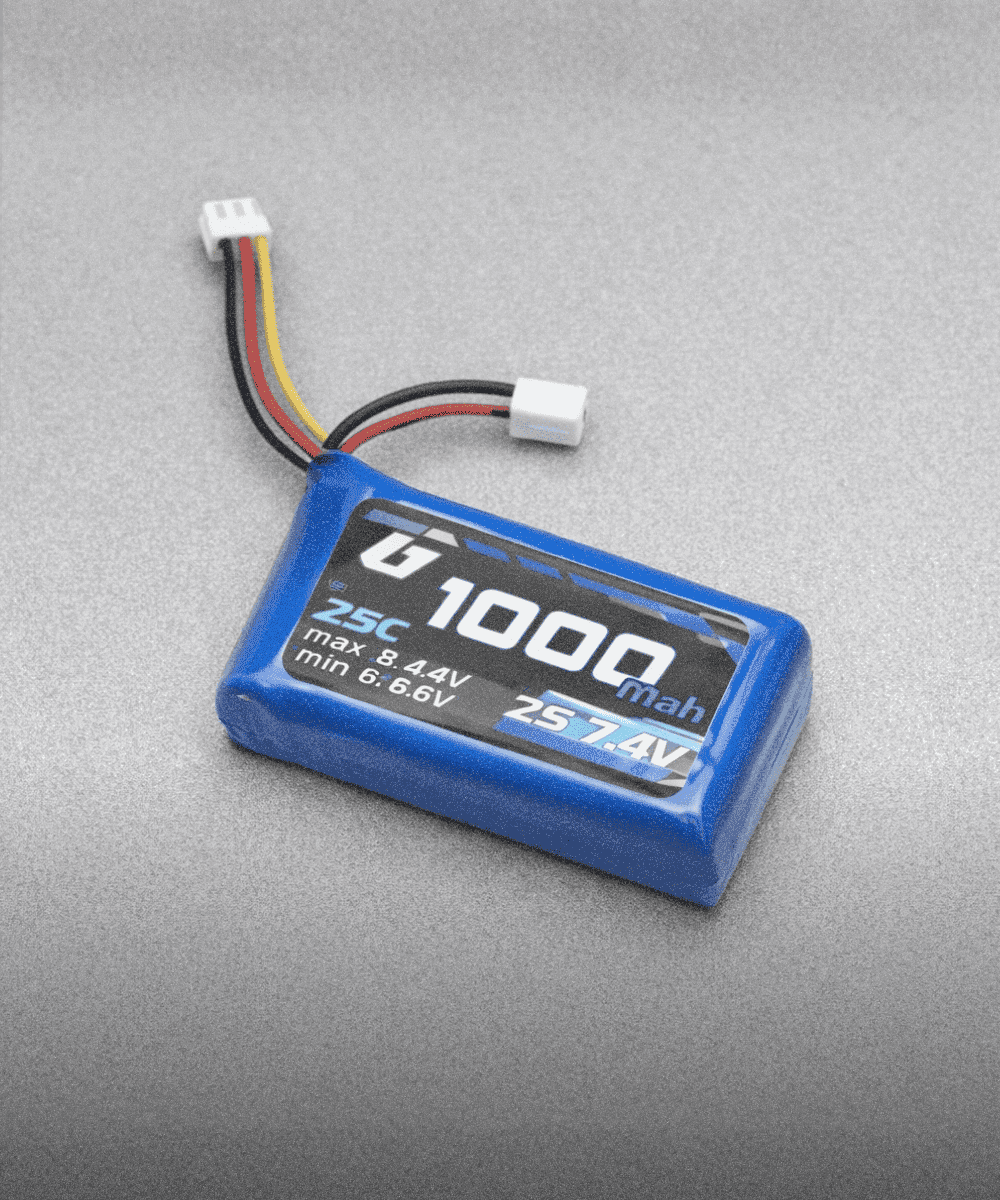
◘ Drive is handled by a pair of 6V 600 RPM high-torque N20 D-shaft gear motors, controlled via the TB6612FNG dual motor driver integrated into the Robot Controller Board, a custom PCB hosting the Arduino Nano, onboard 5V regulation, power decoupling, and an exposed analog sensor rail for direct ARC-16 connection. The system runs on a 2S 7.4V Li-Po battery.
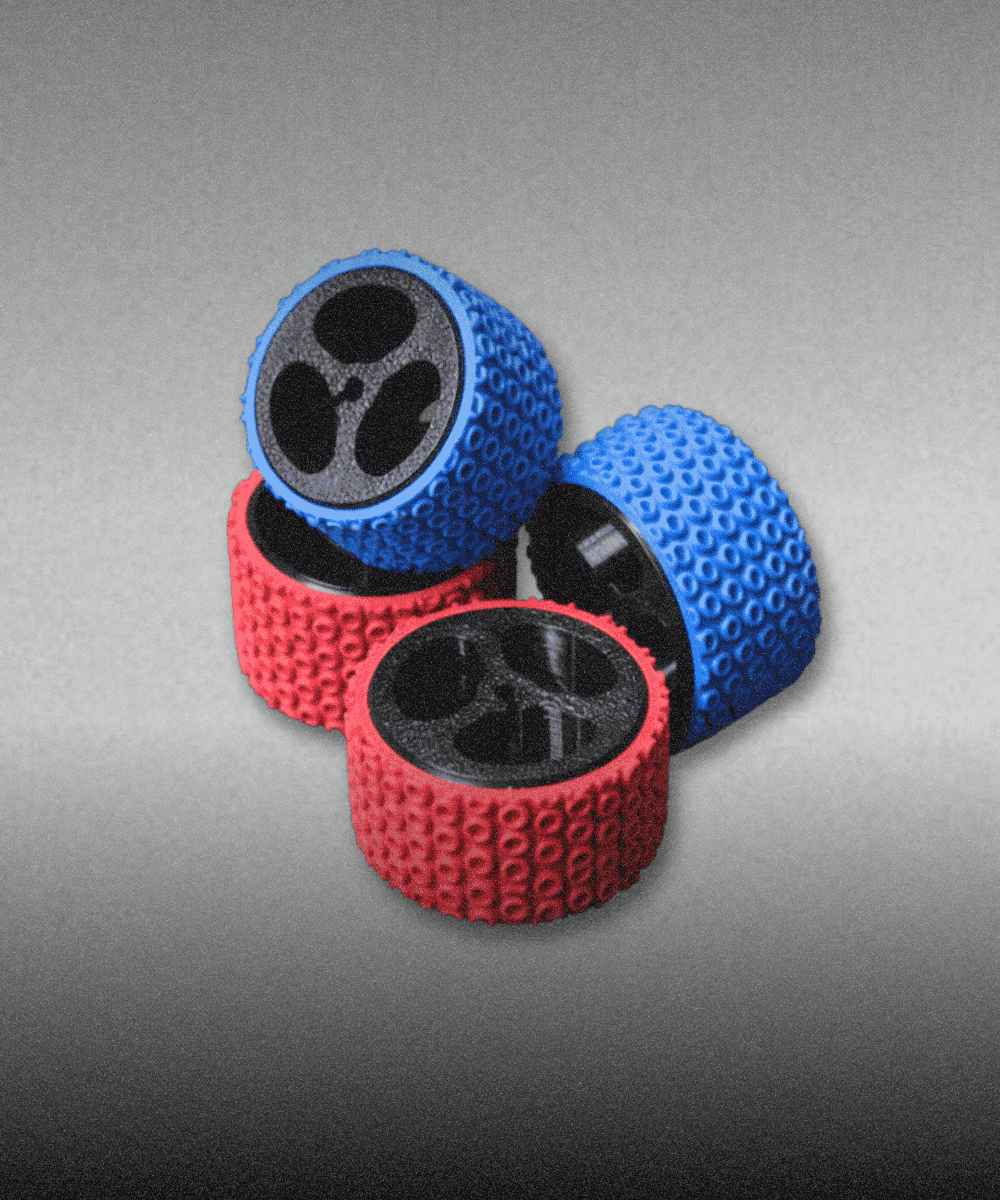
◘ Both the chassis and wheels are 3D-printed in PLA+/PETG, designed with minimalism as the engineering brief. Low mass, low rotational inertia, no unnecessary geometry.
SOFTWARE AND PROCESSING
◘ The Mark-X firmware is a four-state machine running on top of PD control. In run mode, every loop reads all 16 sensors through the multiplexer and computes a weighted centroid (weight map: −12 to +12) representing the line's position relative to center. The FOLLOW state applies PD correction every loop, adjusting left and right motor PWM symmetrically around a ramping base speed. CURR_BASE climbs gradually to BASE (150 PWM) after every recovery event, preventing lurching back to full speed mid-correction.
◘ The moment all 16 sensors lose the line, a priority decision cascade begins. A 50ms debounce crawl comes first. Then the firmware checks leftConf and rightConf - confidence counters that have been accumulating directional history over many sensor frames. If one side is clearly dominant: DIRECTIONAL_PIVOT. If both sides are roughly equal: GAP crawl forward at reduced speed. If GAP times out after 250ms with no reacquisition: U_TURN. Each recovery resets PD memory and ramps speed back up cleanly.
◘ Track inversion detection runs passively in every loop. When exactly 2 center sensors fire while 8 or more outer sensors simultaneously fire in the opposite direction and that pattern holds for 50ms, the firmware flips the global inversion flag. Black-on-white to white-on-black, and back again, handled automatically. No mode switches. No user input required.
COLOR, MATTE
AND FINISH
Available in multiple color options, the Mark-X features a precision 3D-printed matte chassis paired with matching 3D-printed wheels and cleanly integrated components, delivering a cohesive, durable and competition ready finish.
*All the media present are for visual representation purposes only, actual product may vary.

Specifications.




Reviews (0)
01
What is Mark X?
02
Do I need Mark 1 experience before using Mark X?
03
Can I modify the state machine and add new track behaviors?
04
Is the Mark X suitable for competitions?
05
What is Techgeeks?
06
Do you offer support after purchase?
07
Do you ship across India?
08
How long does it take to ship?
09
Do you ship internationally / overseas?