
© THE TECHGEEKS EXPERIENCE 好 奇 心
8523 CORELESS MOTOR - 2S 7.4V - 49000 RPM - MICRO DRONE OR IMPELLER MOTOR


8523 CORELESS MOTOR
BY TECHGEEKS
NO CORE,
This isn’t accidental, It’s engineered.
NO LAG.

We obsessed over rotor mass, response, & power density so you don’t have to.
SMALL IN SIZE,
BIG ON SPIN.
8523 CORELESS MOTOR - 2S 7.4V - 49000 RPM - MICRO DRONE OR IMPELLER MOTOR
NO CORE,
This isn’t accidental, It’s engineered.
NO LAG.
SMALL IN SIZE,
BIG ON SPIN.
We obsessed over rotor mass, response, & power density so you don’t have to.
product overview
ABOUT
Engineered to Spin
built for you, to learn
Step into Motion

DESCRIPTION
A foundational high-speed motor, built to teach the core skills of power, drive and motion.

COMPONENT
8523 STORY
Spin fast, Test things, Build better. A high-speed coreless motor designed for builders who want real control over motion hardware. Beyond spinning a propeller, the 8523 encourages experimentation. Users can change drivers, tune PWM, swap propellers and impellers, add gearing, and explore how changes in voltage, load and mechanics affect real-world thrust and torque.
ABOUT CORELESS MOTOR
The 8523 was picked as a clean entry into high-speed motion without limiting how far you can take it. Whether you’re a beginner learning how a PWM signal becomes rotation, or a builder shaving every gram off a micro drone, the 8523 scales with you. A compact body, simple two-wire drive, and a 2S-rated winding make experimentation natural, not intimidating.
WHAT'S IN HARDWARE
✦ Ironless Rotor Construction
✦ Permanent Magnet Stator
✦ Brushed Commutation
✦ Low Rotor Inertia
✦ Compact 8.5 × 23 mm Body
✦ 1 mm Output Shaft
✦ 2S Rated Winding
SOFTWARE & CONCEPTS
✦ PWM Speed Control
✦ Current & Thermal Management
✦ Thrust & Propeller Matching
✦ Gear Reduction & Drive Trains
✦ Battery & Power Systems
✦ MOSFET Driver Design
2S 7.4V RATED ▪ 49,000 RPM ▪ COMPACT FORM ▪ LIGHTWEIGHT ▪ HIGH POWER-TO-WEIGHT ▪
product overview
ABOUT
Engineered to Spin
built for you, to learn
Step into Motion
DESCRIPTION
A foundational high-speed motor, built to teach the core skills of power, drive and motion.
COMPONENT
8523 STORY
Spin fast, Test things, Build better. A high-speed coreless motor designed for builders who want real control over motion hardware. Beyond spinning a propeller, the 8523 encourages experimentation. Users can change drivers, tune PWM, swap propellers and impellers, add gearing, and explore how changes in voltage, load and mechanics affect real-world thrust and torque.
ABOUT CORELESS MOTOR
The 8523 was picked as a clean entry into high-speed motion without limiting how far you can take it. Whether you’re a beginner learning how a PWM signal becomes rotation, or a builder shaving every gram off a micro drone, the 8523 scales with you. A compact body, simple two-wire drive, and a 2S-rated winding make experimentation natural, not intimidating.
WHAT'S IN HARDWARE
✦ Ironless Rotor Construction
✦ Permanent Magnet Stator
✦ Brushed Commutation
✦ Low Rotor Inertia
✦ Compact 8.5 × 23 mm Body
✦ 1 mm Output Shaft
✦ 2S Rated Winding
SOFTWARE & CONCEPTS
✦ PWM Speed Control
✦ Current & Thermal Management
✦ Thrust & Propeller Matching
✦ Gear Reduction & Drive Trains
✦ Battery & Power Systems
✦ MOSFET Driver Design
2S 7.4V RATED ▪ 49,000 RPM ▪ COMPACT FORM ▪ LIGHTWEIGHT ▪ HIGH POWER-TO-WEIGHT ▪
PRODUCT GALLERY
IMAGES AND VIDEOS
PRODUCT GALLERY
IMAGES AND VIDEOS
PRODUCT FEATURES
USP
Undeniable Advantages
HIGHLY
BALANCED
LOW
BALANCED
HIGH
RESPONSIVE
BALANCED
INERTIA
BALANCED
RPM
Mass is removed with intent. Spin-up follows without hesitation. Speed stays smooth, even when the load changes.
PRODUCT FEATURES
USP
Undeniable Advantages
HIGHLY
BALANCED
LOW
BALANCED
HIGH
RESPONSIVE
BALANCED
INERTIA
BALANCED
RPM
Mass is removed with intent. Spin-up follows without hesitation. Speed stays smooth, even when the load changes.
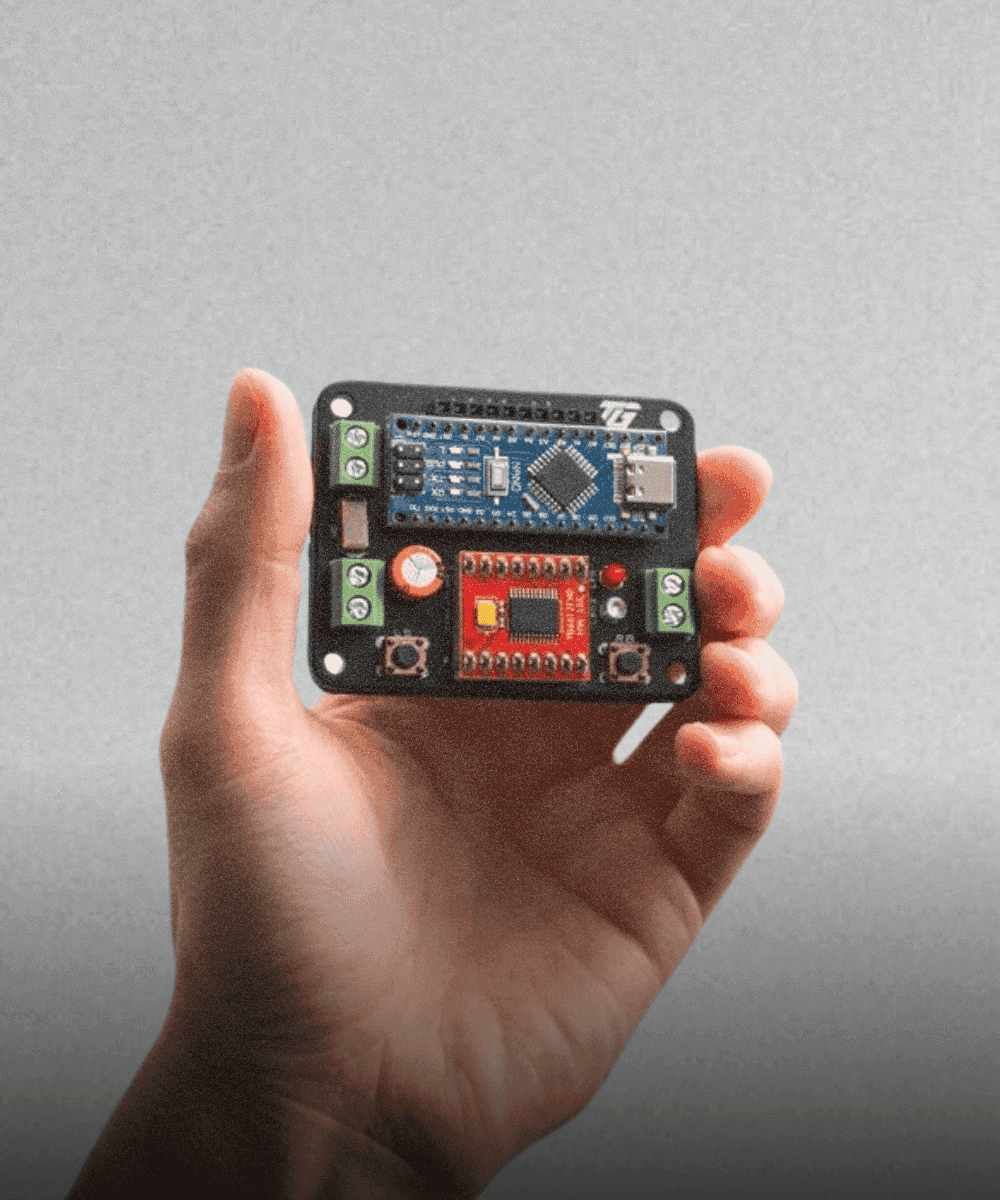
ROBOT CONTROL BOARD
ROBOT CONTROL BOARD
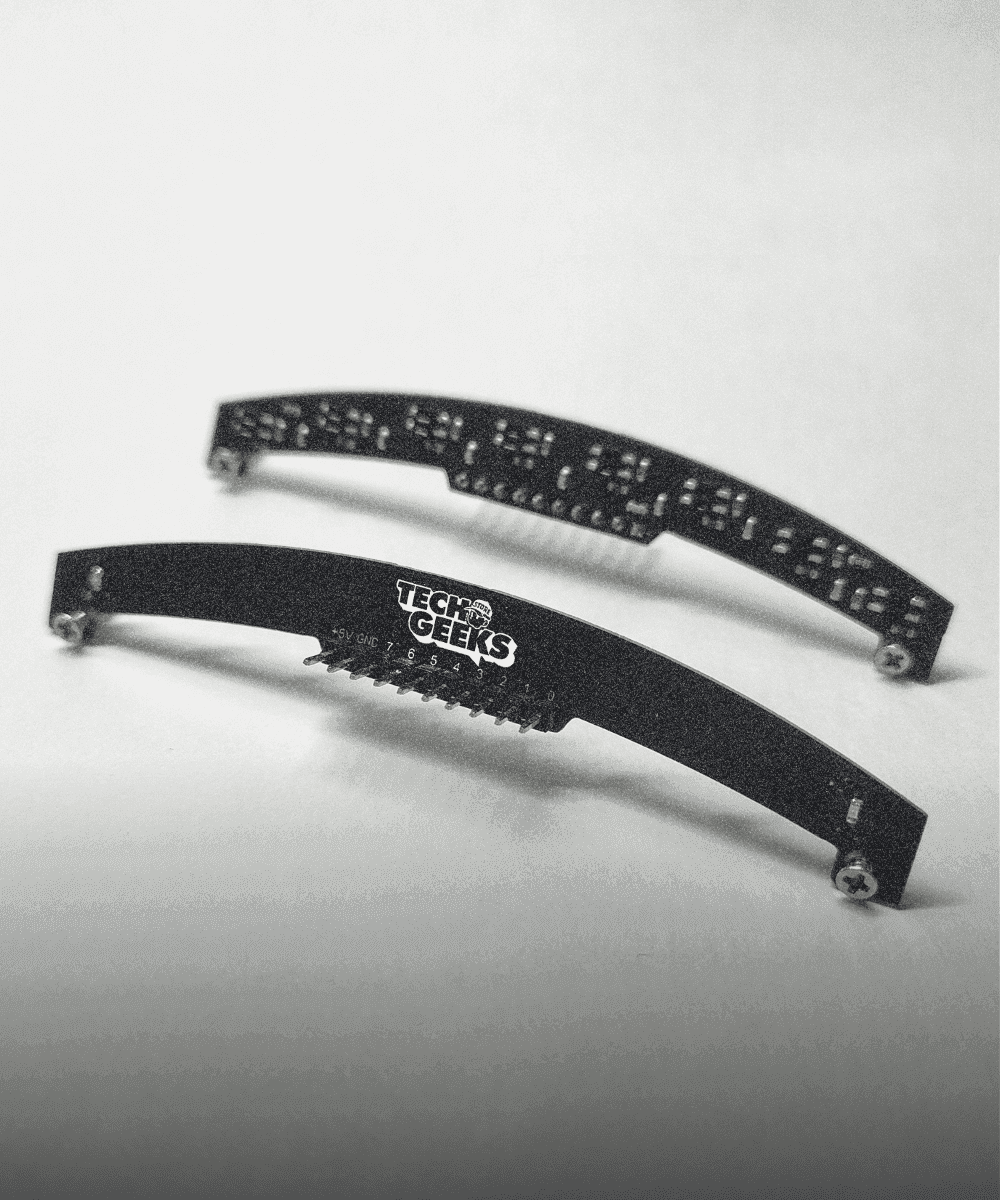
ARC8 8 ARRAY SENSOR
ARC8 8 ARRAY SENSOR
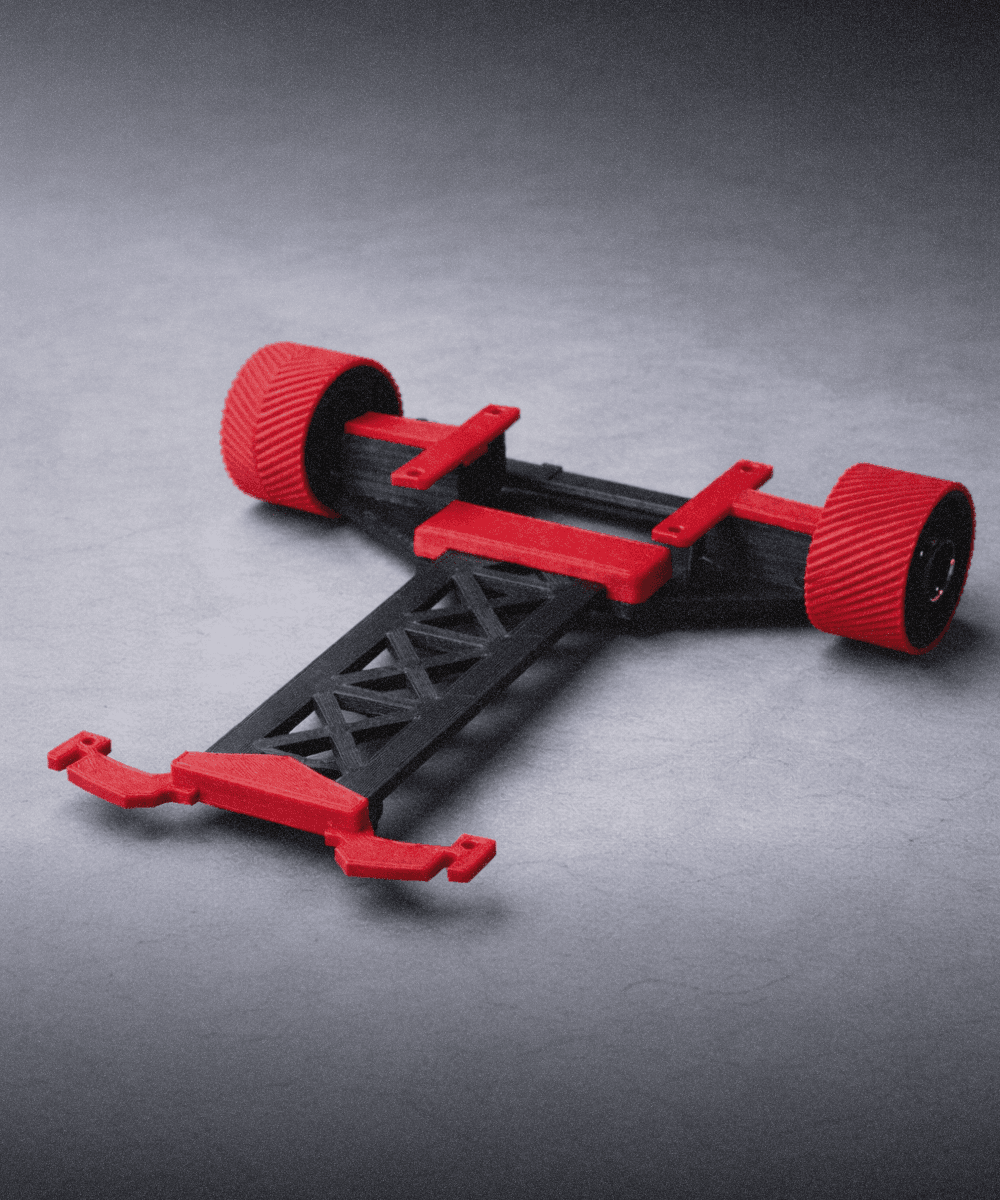
3D PRINTED CHASSIS
ACCESSORIES
PACKED KIT
ACCESSORIES
PACKED KIT
WHAT'S INSIDE
THE BOX
WHAT'S INSIDE
THE BOX
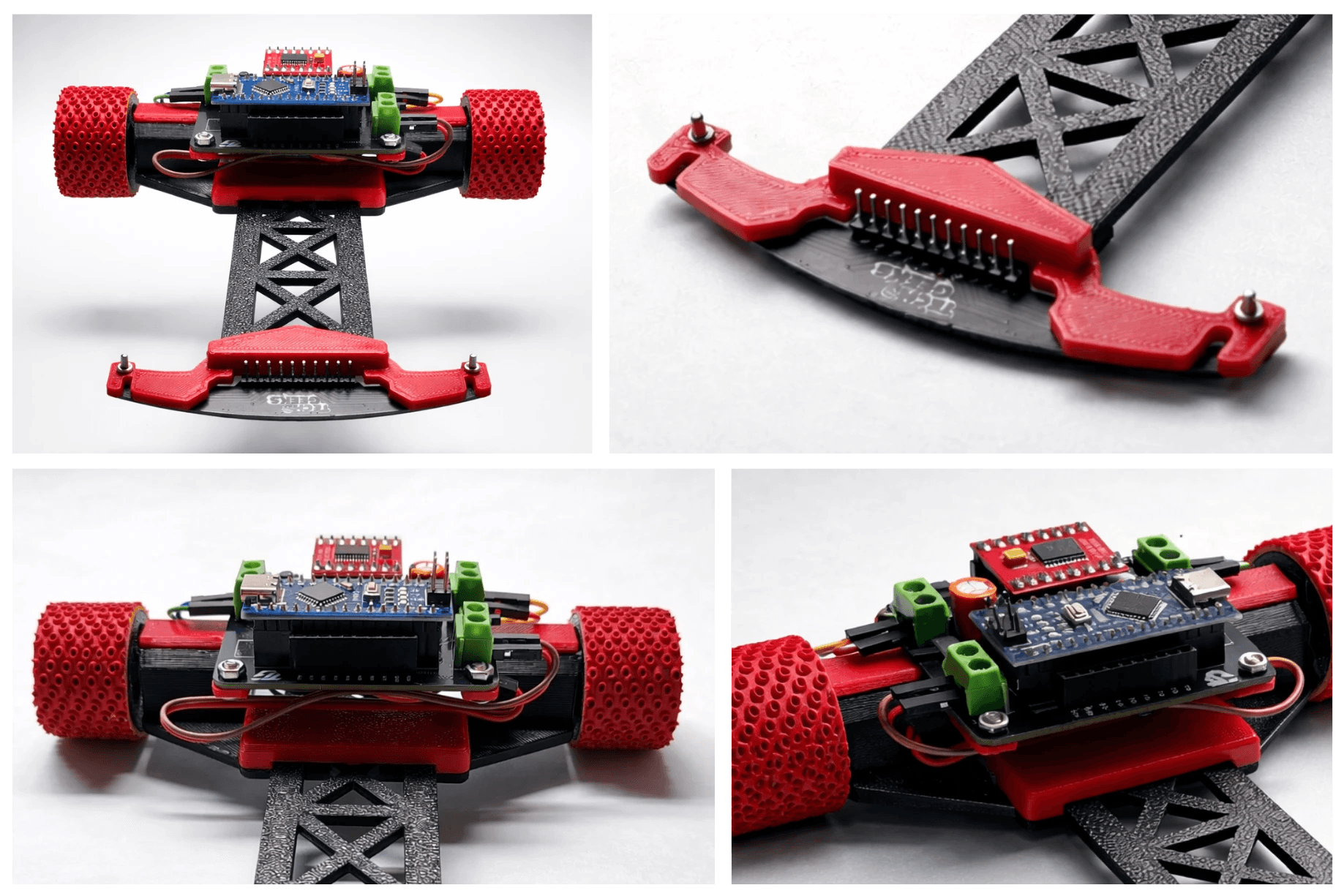
Good things come in small packages, and inside of
this you will find everything you need to get your
line follower up and running. Both hardware and
software included.


PRODUCT SPECS
DESCRIPTION
TECHNICAL
SPECIFICATIONS
✦ The 8523 is a compact, high-speed brushed coreless DC motor measuring 8.5 mm in diameter and 23 mm in length, rated for a 2S (7.4V) LiPo supply. Its ironless, cup-type rotor keeps moving mass to a minimum, which gives it far faster spin-up and slow-down than a conventional iron-core motor.
✦ At rated voltage the motor delivers 49,000 RPM no-load speed, with a stall torque above 80 g·cm and a stall current below 10 A. This high-speed, low-torque character suits direct-driven propellers and impellers, or gear-reduced drive trains where speed is traded for torque.
✦ It is a two-wire permanent magnet brushed motor, so there is no ESC and no commutation logic to worry about. A MOSFET driver and a PWM signal from any microcontroller, such as an Arduino or ESP32, is enough to control speed smoothly.
✦ Because of its low winding inductance and low rotor inertia, the motor reacts to PWM changes almost instantly and runs smoothly even at low speeds with minimal cogging. It is built for speed, not abuse, so it should never be held in a stall while powered.
DRIVING AND
CONTROL
✦ Driving the 8523 follows a simple flow: battery, driver, motor, with a microcontroller generating the PWM signal. For a first spin test, a single analogWrite() on a PWM pin, routed through a logic-level N-channel MOSFET with a flyback diode across the motor, is all you need.
✦ Duty cycle is your throttle. 0% keeps the motor idle and 100% applies full battery voltage. Start low, then ramp up gradually (soft-start) to avoid sudden current spikes. Thanks to the motor’s low inductance, higher PWM frequencies, in the range of several kHz and above, keep current ripple low and the motor quiet.
✦ For forward and reverse in drive-train builds, use a dual H-bridge rated comfortably above the motor’s stall current. Small drivers such as the TB6612FNG, great for N20 gear motors, are rated well below the 8523’s current demand and are not a match for it.
✦ Pair it with decoupling capacitors, a current-limited supply or fuse for your first tests, and a propeller guard. Measure RPM, current and temperature as you go, and let the numbers guide your tuning.
BUILD, MATTE
AND FINISH
the 8523 features a precision-wound ironless rotor inside a compact cylindrical body, with colour-coded lead wires for easy direction identification, delivering a clean, consistent and build-ready finish.
*All the media present are for visual representation purposes only, actual product may slightly vary.

PRODUCT SPECS
DESCRIPTION
TECHNICAL
SPECIFICATIONS
✦ The 8523 is a compact, high-speed brushed coreless DC motor measuring 8.5 mm in diameter and 23 mm in length, rated for a 2S (7.4V) LiPo supply. Its ironless, cup-type rotor keeps moving mass to a minimum, which gives it far faster spin-up and slow-down than a conventional iron-core motor.
✦ At rated voltage the motor delivers 49,000 RPM no-load speed, with a stall torque above 80 g·cm and a stall current below 10 A. This high-speed, low-torque character suits direct-driven propellers and impellers, or gear-reduced drive trains where speed is traded for torque.
✦ It is a two-wire permanent magnet brushed motor, so there is no ESC and no commutation logic to worry about. A MOSFET driver and a PWM signal from any microcontroller, such as an Arduino or ESP32, is enough to control speed smoothly.
✦ Because of its low winding inductance and low rotor inertia, the motor reacts to PWM changes almost instantly and runs smoothly even at low speeds with minimal cogging. It is built for speed, not abuse, so it should never be held in a stall while powered.
DRIVING AND
CONTROL
✦ Driving the 8523 follows a simple flow: battery, driver, motor, with a microcontroller generating the PWM signal. For a first spin test, a single analogWrite() on a PWM pin, routed through a logic-level N-channel MOSFET with a flyback diode across the motor, is all you need.
✦ Duty cycle is your throttle. 0% keeps the motor idle and 100% applies full battery voltage. Start low, then ramp up gradually (soft-start) to avoid sudden current spikes. Thanks to the motor’s low inductance, higher PWM frequencies, in the range of several kHz and above, keep current ripple low and the motor quiet.
✦ For forward and reverse in drive-train builds, use a dual H-bridge rated comfortably above the motor’s stall current. Small drivers such as the TB6612FNG, great for N20 gear motors, are rated well below the 8523’s current demand and are not a match for it.
✦ Pair it with decoupling capacitors, a current-limited supply or fuse for your first tests, and a propeller guard. Measure RPM, current and temperature as you go, and let the numbers guide your tuning.
BUILD, MATTE
AND FINISH
the 8523 features a precision-wound ironless rotor inside a compact cylindrical body, with colour-coded lead wires for easy direction identification, delivering a clean, consistent and build-ready finish.
*All the media present are for visual representation purposes only, actual product may slightly vary.
Specifications.
Specifications.
Hardware Specs
Motor Type
Brushed coreless (ironless rotor) DC motor
Model
8523
Rated Voltage
2S, 7.4V DC
No-Load Speed
49,000 RPM
Stall Torque
> 80 g·cm
Stall Current
< 10 A
Size
8.5 mm Ø x 23 mm L
Shaft
6 mm Ø
Lead Wires
pre-attached wires
Hardware Specs
Motor Type
Brushed coreless (ironless rotor) DC motor
Model
8523
Rated Voltage
2S, 7.4V DC
No-Load Speed
49,000 RPM
Stall Torque
> 80 g·cm
Stall Current
< 10 A
Size
8.5 mm Ø x 23 mm L
*All the specifications listed are retrieved from relevant sources and are subject to vary.
Power & Energy
Supply
2S LiPo (7.4V nominal) or regulated DC supply
Speed Control
PWM duty cycle, 0 to 100%
Stall Current
< 10 A, a fault condition to avoid
Recommended Driver
Logic-level N-channel MOSFET, or H-bridge rated above stall current
Protection
Flyback diode, bypass capacitor, fuse or current limit
Safety
Never lock the shaft while powered
*The motor is intended to run from a compact Li-Po battery. Li-Po batteries pose accidental risks, please refer to the ‘Battery Safety Guide’ for safe usage. At 49,000 RPM, propellers and impellers can cause injury. Always wear eye protection, use a guard, and keep fingers and loose wires clear while testing.
Dimensions
Weight
~ 10 gms (subject to vary)
Size
8.5 mm Ø x 23 mm L
Dimensions
Weight
~ 10 gms (subject to vary)
Size
8.5 mm Ø x 23 mm L
*The length between wheels and sensor is adjustable to fine tune the performance. Overall dimensions lie well within the safe limits for various competitions.
SCIENCE BEHIND THE BOT
CONCEPTS
WHAT'S
TO LEARN
01
Electromechanical Fundamentals
Learn how current, magnetic fields and torque turn electrical energy into rotation, and how a coreless rotor changes speed, inertia and response.
02
Motor Drivers & Power Electronics
Understand how MOSFETs, H-bridges and PWM control motor speed, how flyback paths and decoupling protect your circuit, and why driver ratings matter.
03
Thrust, Drive & Mechanical Design
Explore how propellers, impellers and gear reductions convert high RPM into thrust or torque, and how mounting, balance and weight shape real-world performance.
04
Power Systems & Safe Testing
Develop good habits in battery selection, current budgeting, thermal limits and safe bench testing, while measuring RPM, current and temperature along the way.
SCIENCE BEHIND THE BOT
CONCEPTS
WHAT'S
TO LEARN
Electromechanical Fundamentals
Learn how current, magnetic fields and torque turn electrical energy into rotation, and how a coreless rotor changes speed, inertia and response.
Motor Drivers & Power Electronics
Understand how MOSFETs, H-bridges and PWM control motor speed, how flyback paths and decoupling protect your circuit, and why driver ratings matter.
Thrust, Drive & Mechanical Design
Explore how propellers, impellers and gear reductions convert high RPM into thrust or torque, and how mounting, balance and weight shape real-world performance.
Power Systems & Safe Testing
Develop good habits in battery selection, current budgeting, thermal limits and safe bench testing, while measuring RPM, current and temperature along the way.
© THE TECHGEEKS EXPERIENCE 好 奇 心
user insights and Reviews
Reviews (0)
PRODUCT
user insights and Reviews
Reviews (0)
FAQS
GOT MORE QUESTIONS?
Clarifying doubts
Before your journey Begins with
Real Process.
01
What is the 8523 Coreless Motor?
02
Do I need any prior experience to use the 8523?
03
What voltage and battery should I use?
04
Which motor driver should I use?
05
Is the 8523 suitable for academic projects and research?
06
Do you offer support after purchase?
07
Do you ship across India?
08
How long does it take to ship?
09
Do you ship internationally / overseas?
FAQS
GOT MORE QUESTIONS?
01
What is the 8523 Coreless Motor?
02
Do I need any prior experience to use the 8523?
03
What voltage and battery should I use?
04
Which motor driver should I use?
05
Is the 8523 suitable for academic projects and research?
06
Do you offer support after purchase?
07
Do you ship across India?
08
How long does it take to ship?
09
Do you ship internationally / overseas?
MOVE CURSOR TO EXPLORE
PEACE OUT
TAP TO EXPLORE
PEACE OUT
why choose us
FIN.
At Techgeeks, we believe that great innovation starts with right people and reliable tools. We are committed to delivering the highest quality hardware to ensure nothing stands between you and your creation.
Thank you for choosing us to fuel your curiosity. Cheers to building the future.
Arduino line follower Robotics kit for Students, Builders, college students and more - India
8523 Coreless Motor for Mini Drones, Robotics & Research Builds - India
The 8523 Coreless Motor is a compact, high-speed brushed DC motor designed for students, makers and builders working on mini drones, quadcopters, impeller setups, drive trains and robotics research. It measures 8.5 mm × 23 mm, is rated for a 2S 7.4V LiPo, and delivers 49,000 RPM with a stall torque above 80 g·cm and a stall current below 10 A. Its ironless, low-inertia rotor gives fast acceleration, smooth low-speed rotation and a high power-to-weight ratio, with no ESC required. Drive it with a PWM signal from an Arduino, ESP32 or any microcontroller through a MOSFET or H-bridge driver. If you’re searching for a high-speed coreless motor in India that is clearly rated for 2S 7.4V, comes with honest published specs, and is backed by proper documentation, the 8523 is your answer. It ships across India with free delivery on orders above ₹[2999]. The 8523 is TechGeeks’ high-speed coreless motor for lightweight builds, designed for engineering students, college makers and robotics clubs. Who Is It For: Students and makers building micro drones, thrust test stands, impeller experiments and geared drive trains, and anyone who wants to learn motor control hands-on rather than through tutorials alone. Why the 8523: A coreless rotor means low inertia and fast response, a 2S rating means real power from a compact battery, and clear specs mean you can design your driver and power system with confidence. IN ACTION MINI DRONES & QUADCOPTERS Direct-drive micro propellers for lightweight multirotor builds, flight dynamics studies and hover experiments. IMPELLER SETUPS Spin small impellers and fans for airflow, thrust and ducted-fan experiments on the bench. DRIVE TRAINS Pair the 8523 with a gear reduction to build fast, compact drive systems for micro robots. MORE TO EXPLORE ON YOUR OWN ✦ Thrust test stands and propeller comparisons ✦ Motor characterisation labs (RPM vs voltage, current vs load) ✦ Propeller-driven and fan-propelled mini robots ✦ Fast-response actuators and small mechanisms ✦ Geared micro rovers and mini sumo-style platforms ✦ PWM and driver circuit experiments
8523 coreless motor, 2S coreless motor, 7.4V coreless motor, 49000 RPM DC motor, micro drone motor India, quadcopter motor, impeller motor, high speed micro DC motor, hollow cup motor, brushed coreless motor, robotics motor India, DIY drone motor, mini drone motor


GUIDE TEXT
Build the bot from scratch with the parts included. (soldering iron, fasteners, wires may be needed)
GUIDE TEXT
Receive a ready to run robot, assembled before dispatch. (battery charger, tools may be needed)
Close


