
© THE TECHGEEKS EXPERIENCE 好 奇 心
MARK 1 LINE FOLLOWER ROBOT - LFR BOT - PATH TRACER


MARK 1 LFR
BY TECHGEEKS
LIGHT AS
This isn’t accidental, It’s engineered.
A FEATHER,

We obsessed over balance, rigidity, & weight reduction so you don’t have to.
STRONG BY
DESIGN.
MARK 1 LINE FOLLOWER ROBOT - LFR BOT - PATH TRACER
LIGHT AS
This isn’t accidental, It’s engineered.
A FEATHER,
STRONG BY
DESIGN.
We obsessed over balance, rigidity, & weight reduction so you don’t have to.
product overview
ABOUT
Designed to Compete
built for you, to learn
Step into Robotics

DESCRIPTION
A foundational LFR, built to teach the core skills of sensing and control.

GUIDED KIT
MARK-1 STORY
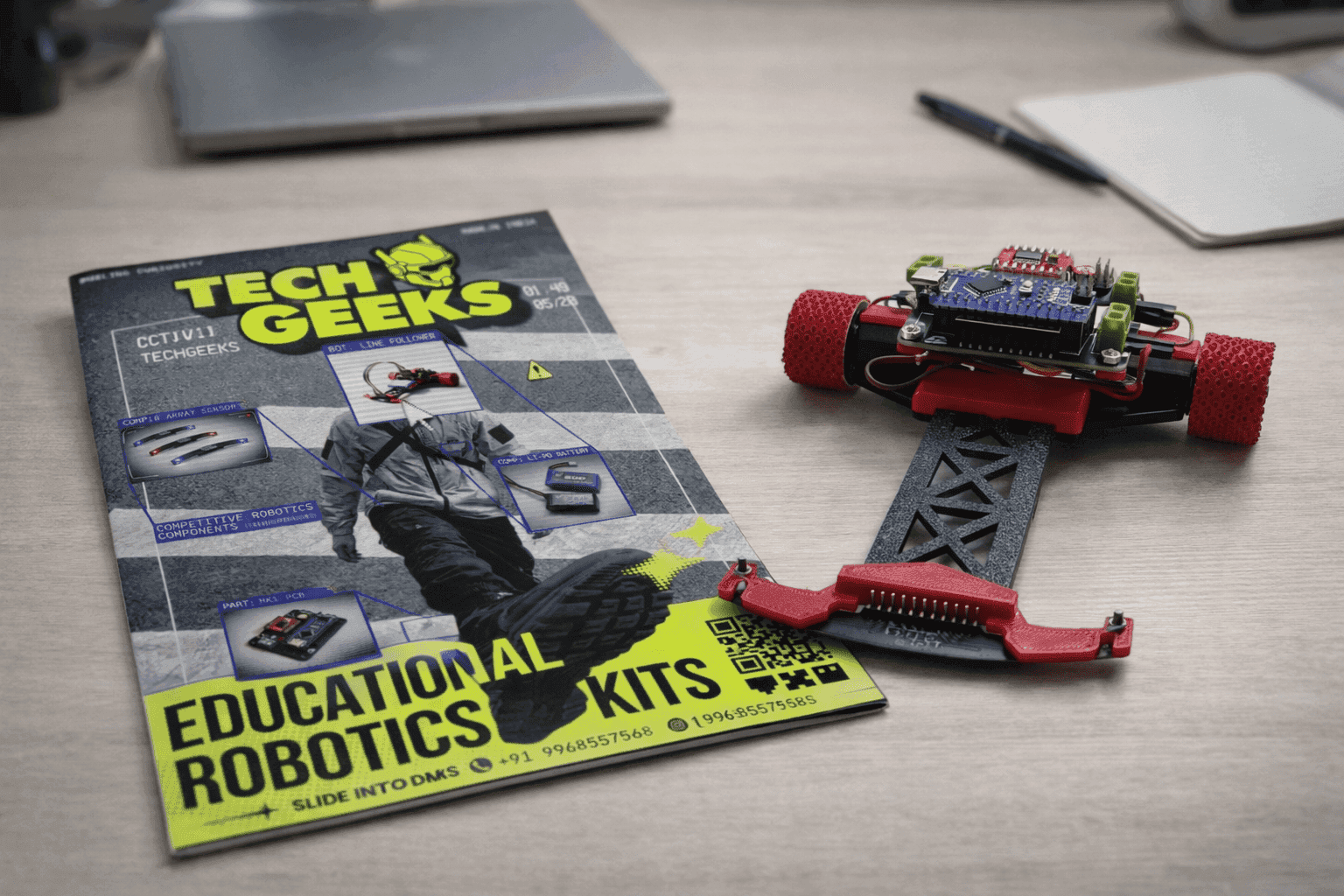
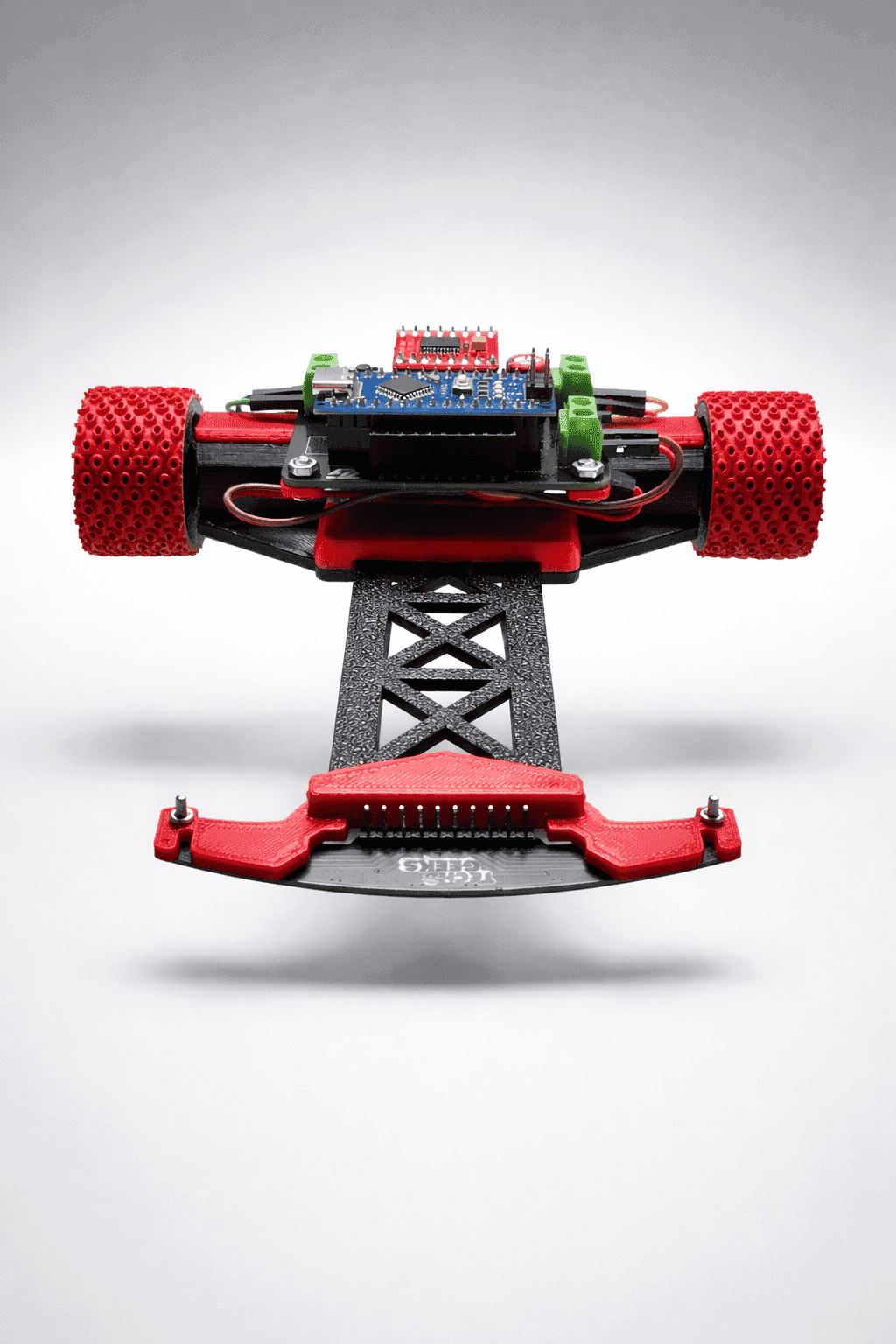
Learn fast, Break things, Build better. A competition-ready line follower designed for builders who want real control over hardware and code. Beyond running out of the box, MK-1 encourages experimentation. Users can modify code, adjust control parameters, add modules, and explore how changes in hardware and software affect real-world behavior.
ABOUT LINE FOLLOWER
Mark-1 was designed as a clean entry into competitive robotics without limiting how far you can take it. Whether you’re a beginner learning how sensors talk to code, or a competitor refining PID loops for race conditions, MK-1 scales with you. Arduino-based control, accessible electronics, and a modular layout make experimentation natural, not intimidating.
WHAT'S IN HARDWARE
✦ Embedded Systems
✦ Machine Dynamics
✦ Sensor Integration
✦ Microcontroller
✦ PCB Designing
✦ 3Dp & CAD Modeling
✦ Power Source Decoupling
SOFTWARE & CONCEPTS
✦ Programming Fundamentals
✦ Control Theory
✦ Algorithm Designing
✦ P.I.D
✦ Parameter Tuning
✦ Low level optimization
4 COLORS AVAILABLE ▪ COMPACT FORM ▪ LIGHTWEIGHT ▪ OPEN SOURCE HARDWARE PLATFORM ▪
product overview
ABOUT
Designed to Compete
built for you, to learn
Step into Robotics
DESCRIPTION
A foundational LFR, built to teach the core skills of sensing and control.
GUIDED KIT
MARK-1 STORY
Learn fast, Break things, Build better. A competition-ready line follower designed for builders who want real control over hardware and code. Beyond running out of the box, MK-1 encourages experimentation. Users can modify code, adjust control parameters, add modules, and explore how changes in hardware and software affect real-world behavior.
ABOUT LINE FOLLOWER
Mark-1 was designed as a clean entry into competitive robotics without limiting how far you can take it. Whether you’re a beginner learning how sensors talk to code, or a competitor refining PID loops for race conditions, MK-1 scales with you. Arduino-based control, accessible electronics, and a modular layout make experimentation natural, not intimidating.
WHAT'S IN HARDWARE
✦ Embedded Systems
✦ Machine Dynamics
✦ Sensor Integration
✦ Microcontroller
✦ PCB Designing
✦ 3Dp & CAD Modeling
✦ Power Source Decoupling
SOFTWARE & CONCEPTS
✦ Programming Fundamentals
✦ Control Theory
✦ Algorithm Designing
✦ P.I.D
✦ Parameter Tuning
✦ Low level optimization
4 COLORS AVAILABLE ▪ COMPACT FORM ▪ LIGHTWEIGHT ▪ OPEN SOURCE HARDWARE PLATFORM ▪
PRODUCT GALLERY
IMAGES AND VIDEOS
PRODUCT GALLERY
IMAGES AND VIDEOS
PRODUCT FEATURES
USP
Undeniable Advantages
BALANCED
BALANCED
PRECISE
BALANCED
ACCURATE
GEOMETRY
BALANCED
MOTION
BALANCED
SENSORS
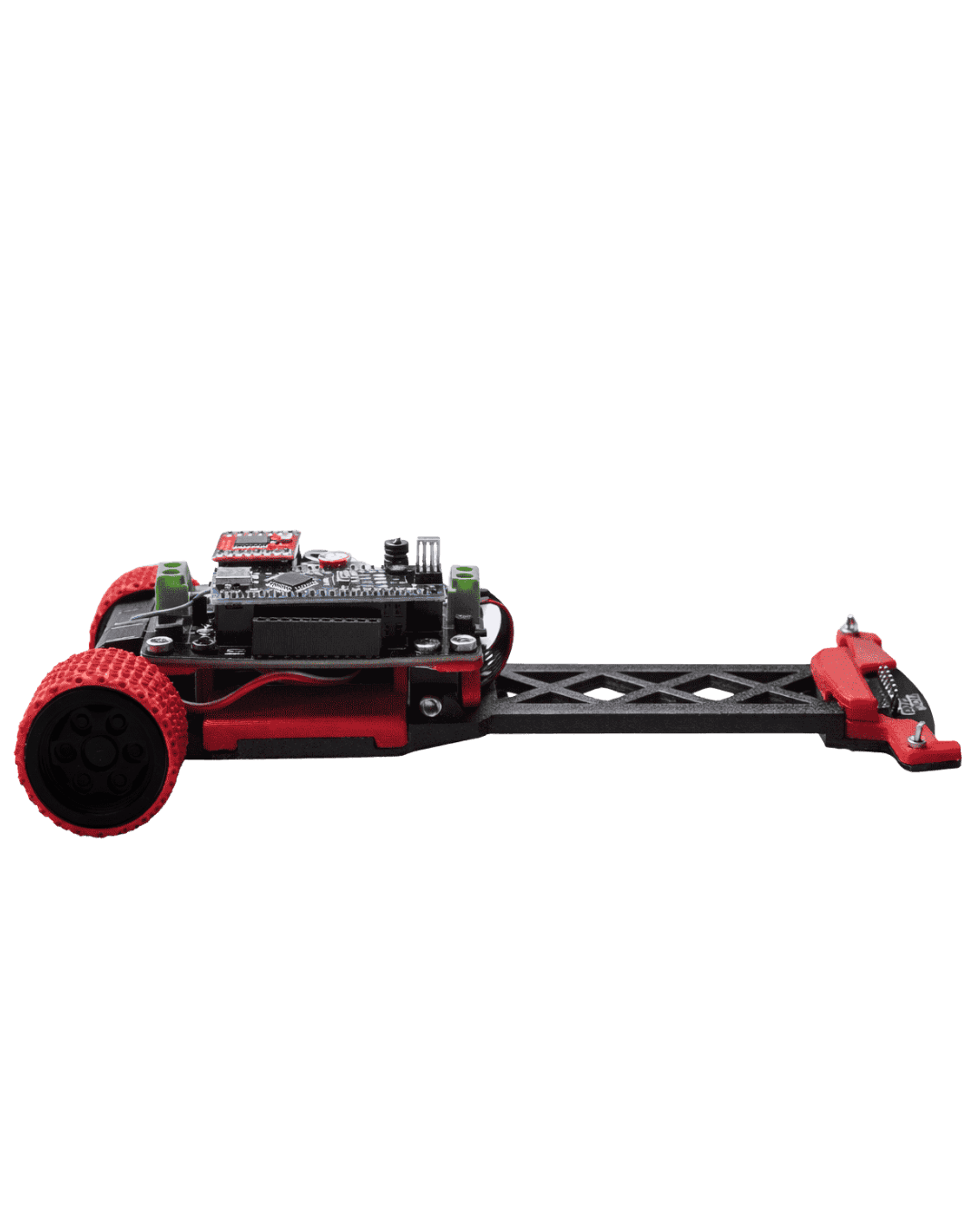
Weight is placed with intent.Motion follows without hesitation.Movement stays predictable, even when speed increases.
PRODUCT FEATURES
USP
Undeniable Advantages
BALANCED
BALANCED
PRECISE
BALANCED
ACCURATE
GEOMETRY
BALANCED
MOTION
BALANCED
SENSORS
Weight is placed with intent.Motion follows without hesitation.Movement stays predictable, even when speed increases.
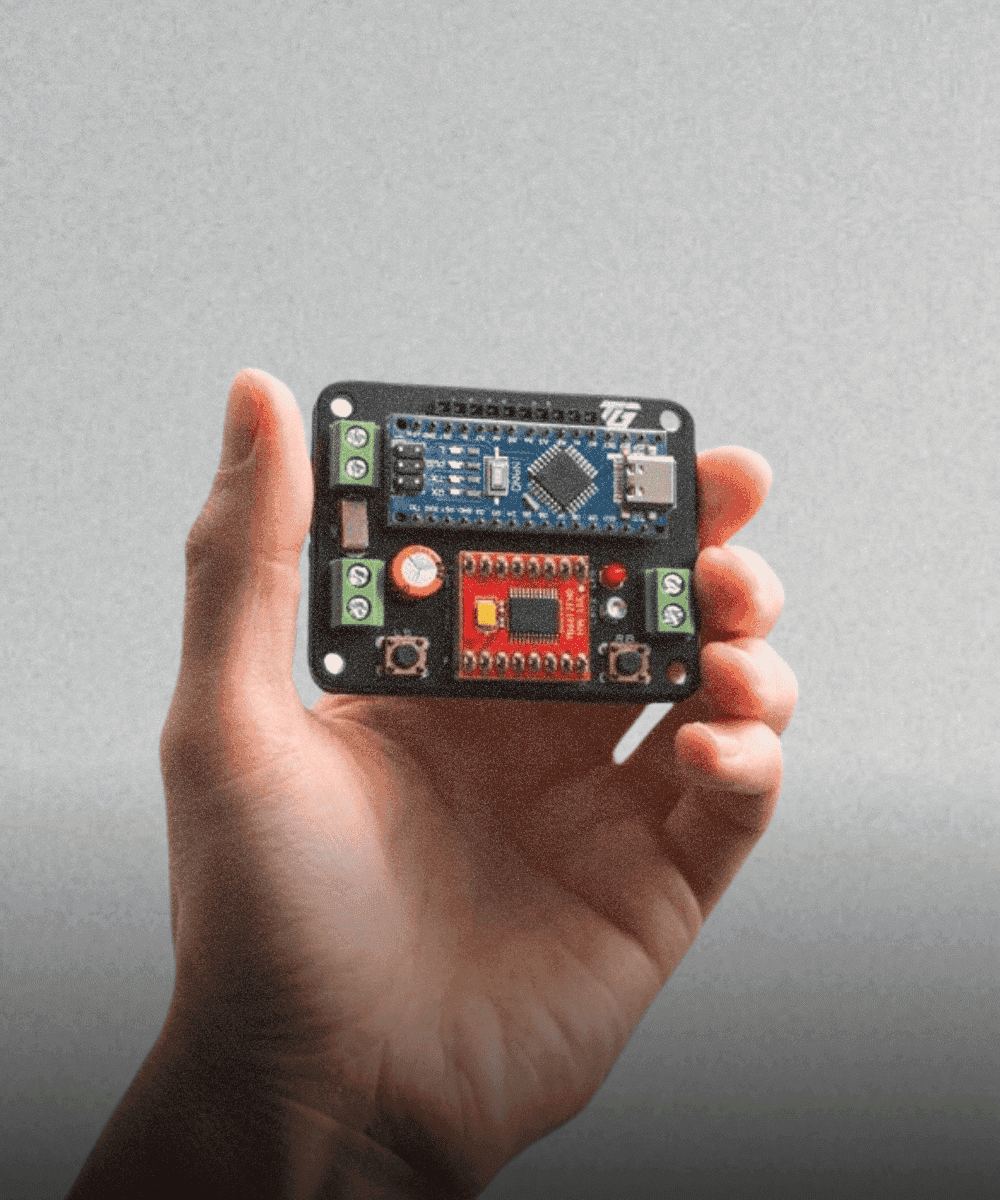
ROBOT CONTROL BOARD
ROBOT CONTROL BOARD
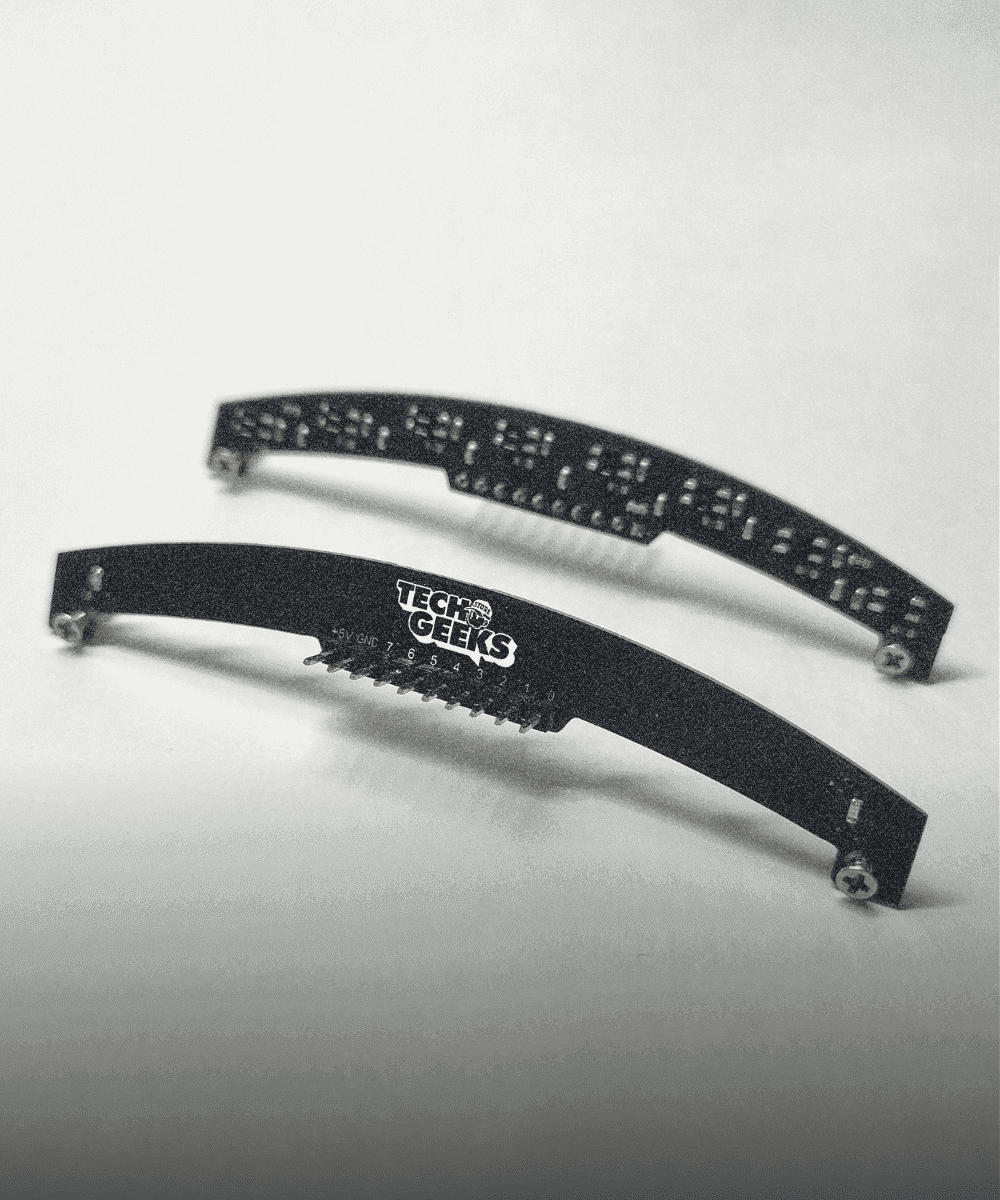
ARC8 8 ARRAY SENSOR
ARC8 8 ARRAY SENSOR
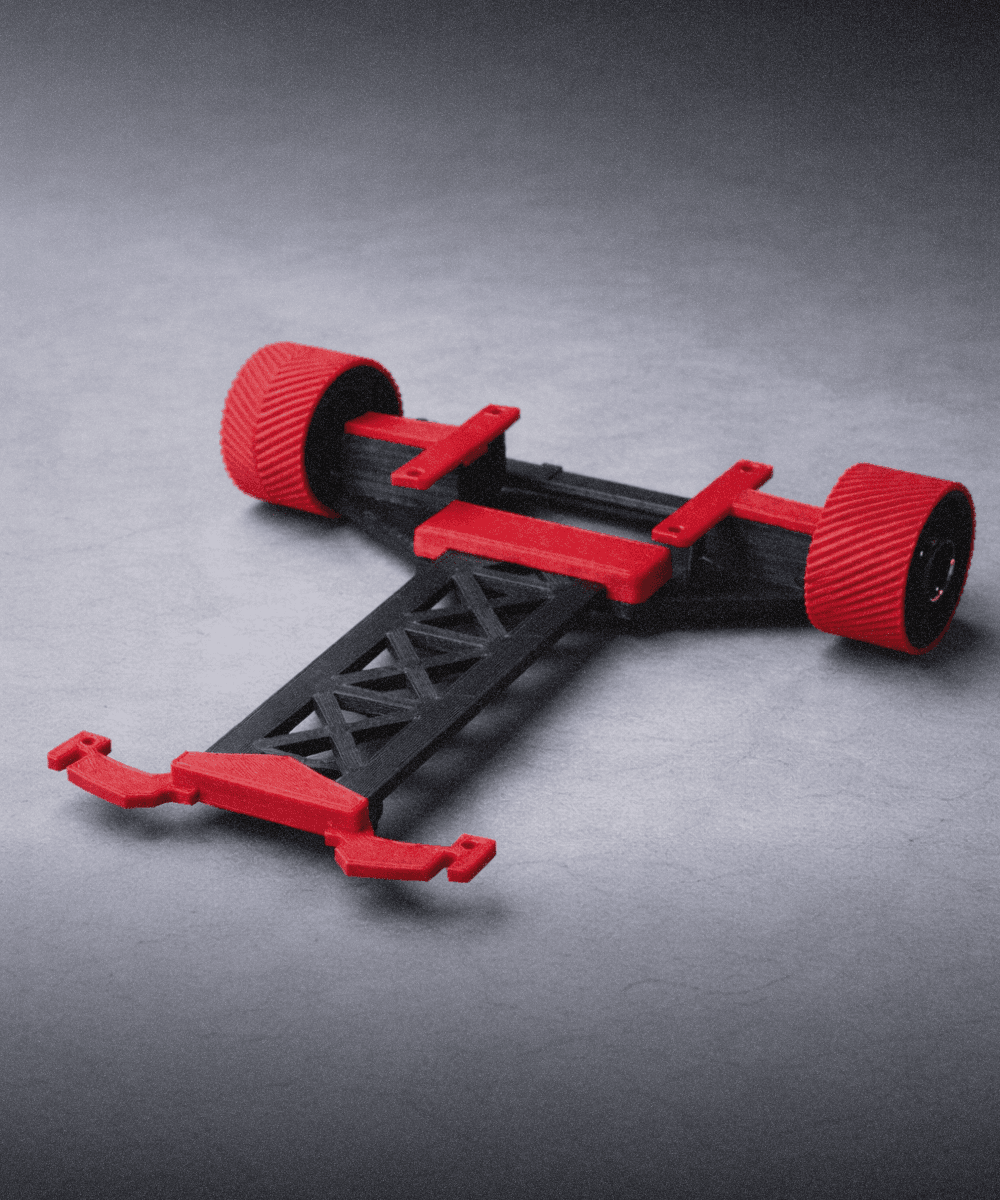
3D PRINTED CHASSIS
ACCESSORIES
PACKED KIT
WHAT'S INSIDE
THE BOX
WHAT'S INSIDE
THE BOX
Good things come in small packages, and inside of
this you will find everything you need to get your
line follower up and running. Both hardware and
software included.


3D PRINTED CHASSIS
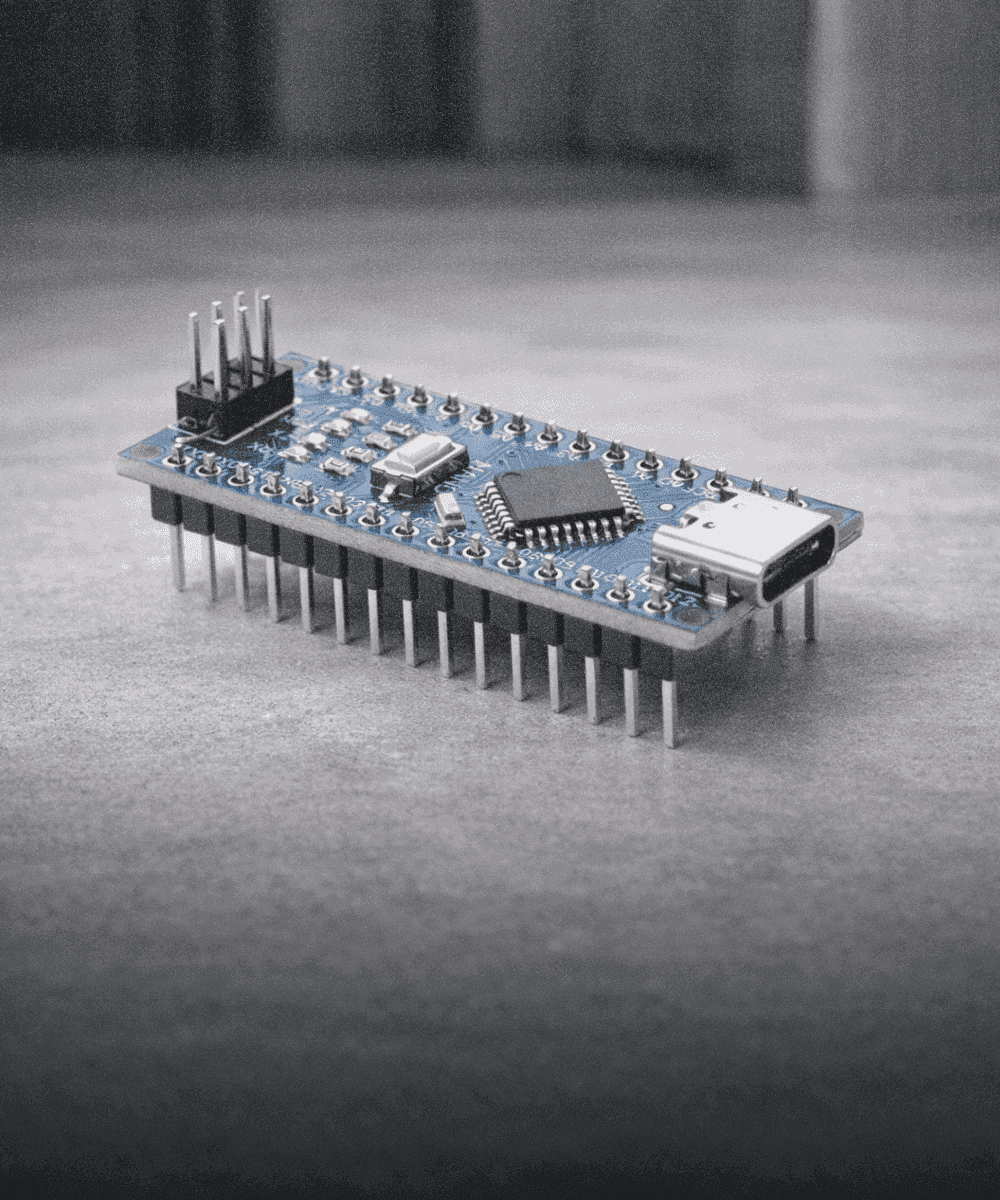
ARDUINO NANO TYPE-C
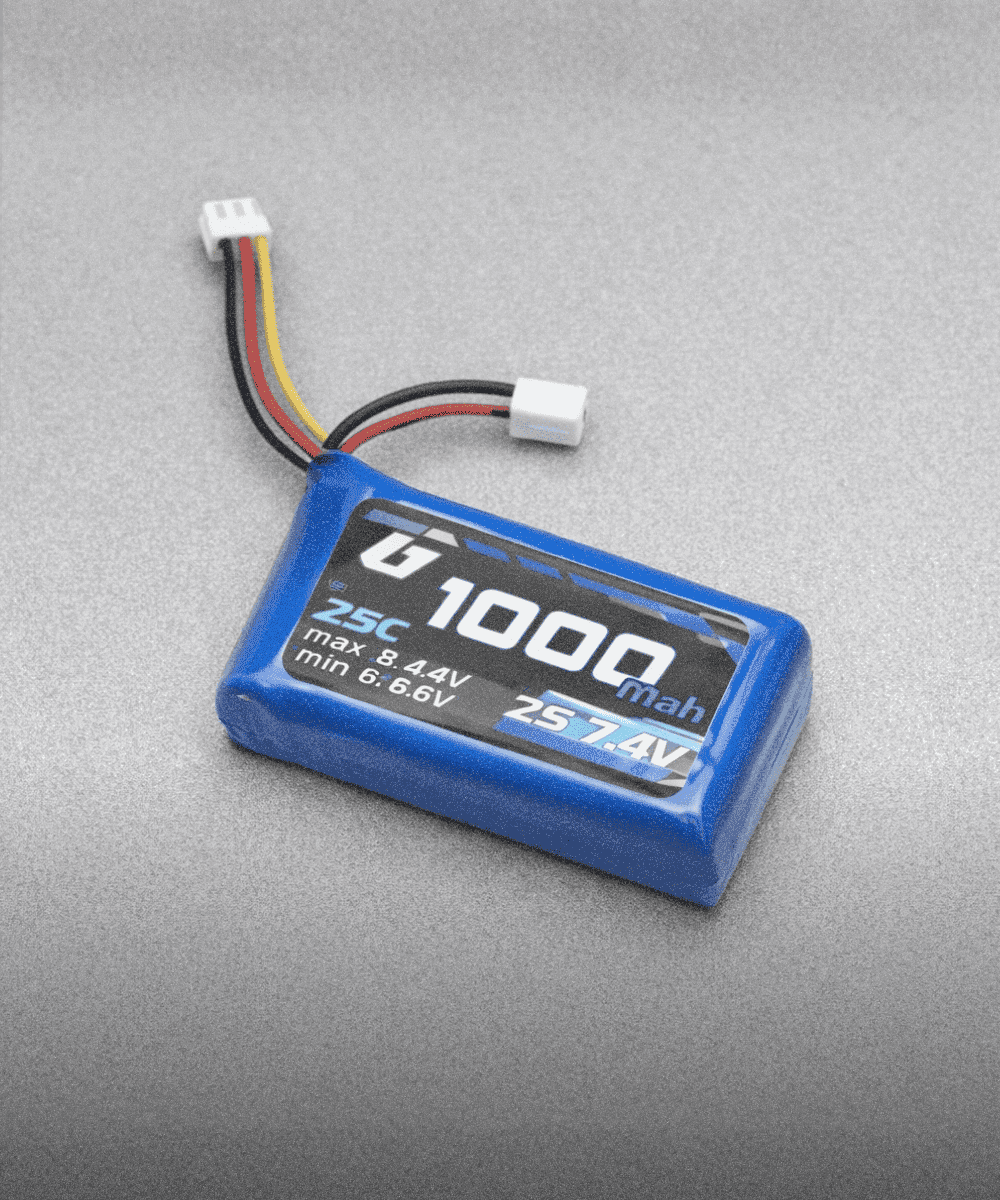
COMPACT Li-Po BATTERY
COMPACT Li-Po BATTERY
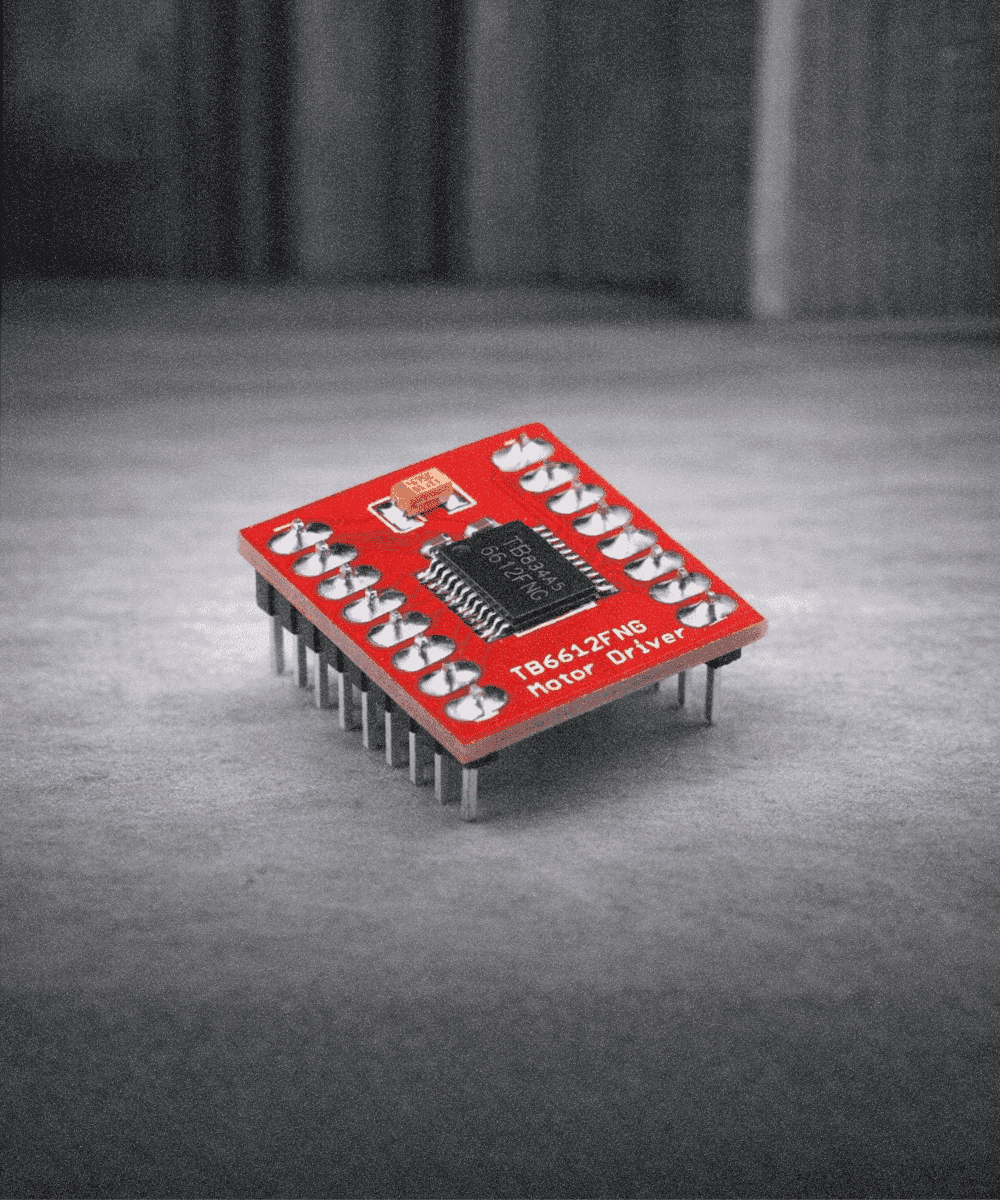
TB6612FNG MOTOR DRIVER
TB6612FNG MOTOR DRIVER
ARDUINO NANO TYPE-C

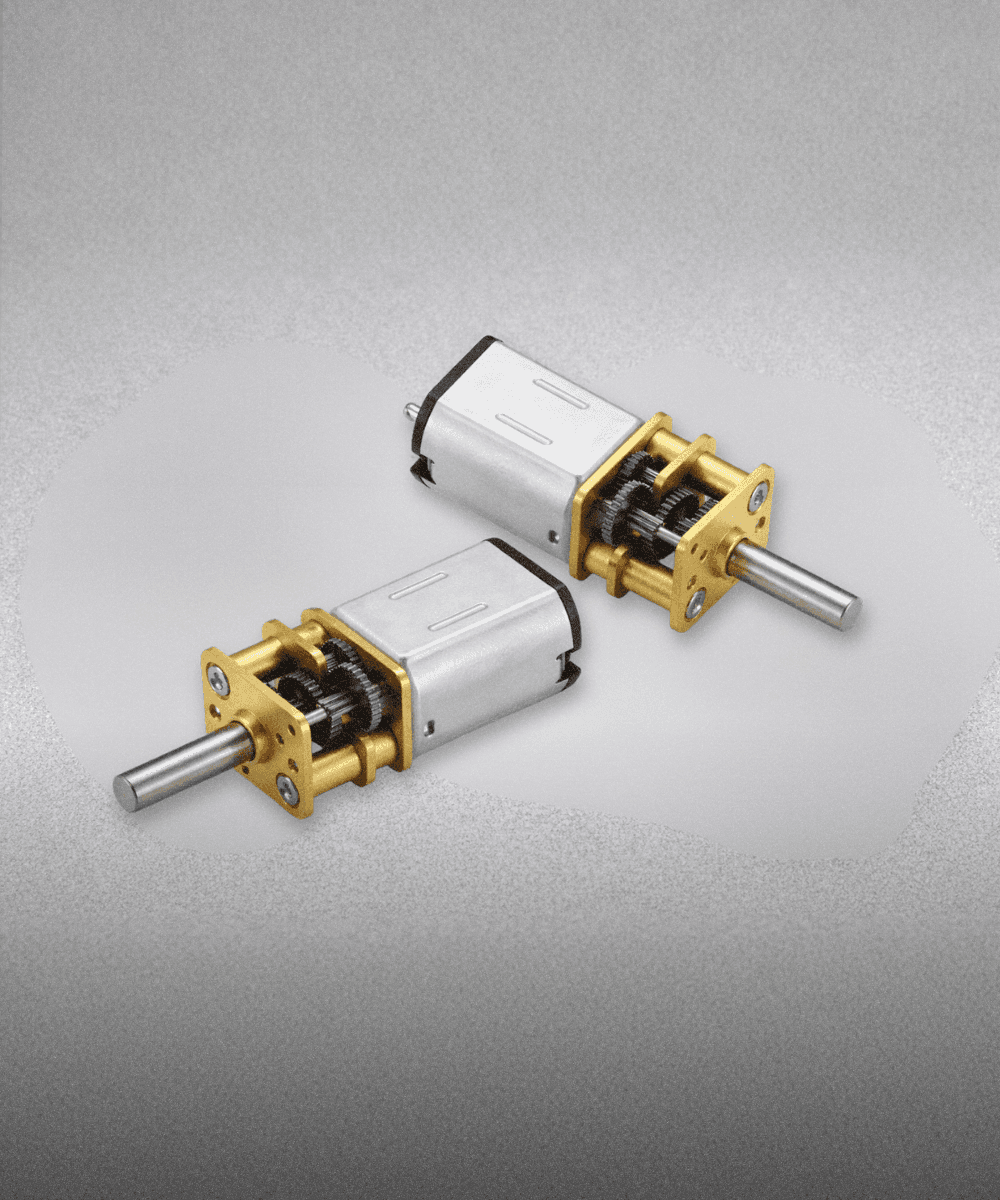
600 RPM N20 MOTORS x2
600 RPM N20 MOTORS x2
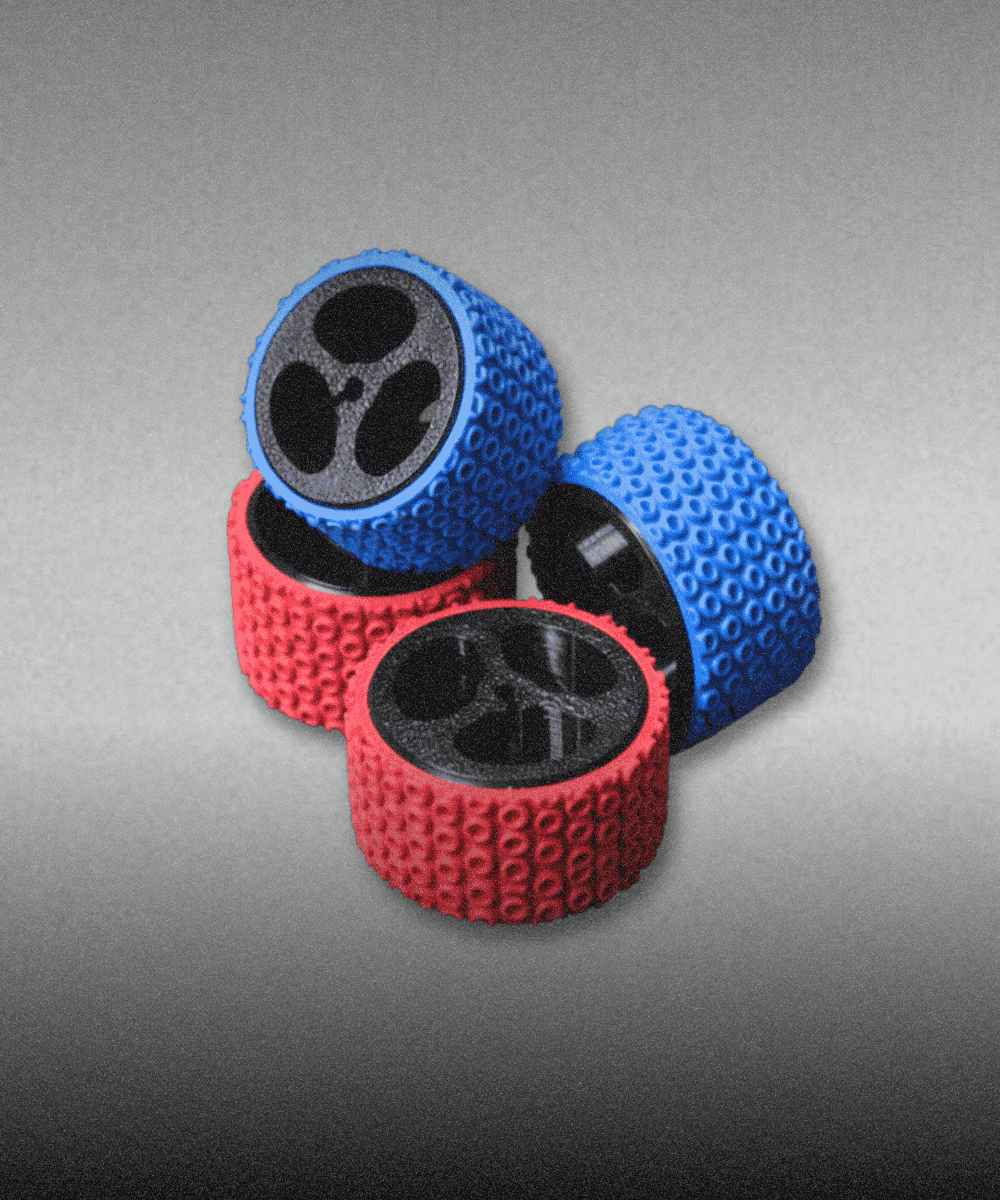
HIGH TRACTION WHEELS x2
HIGH TRACTION WHEELS x2
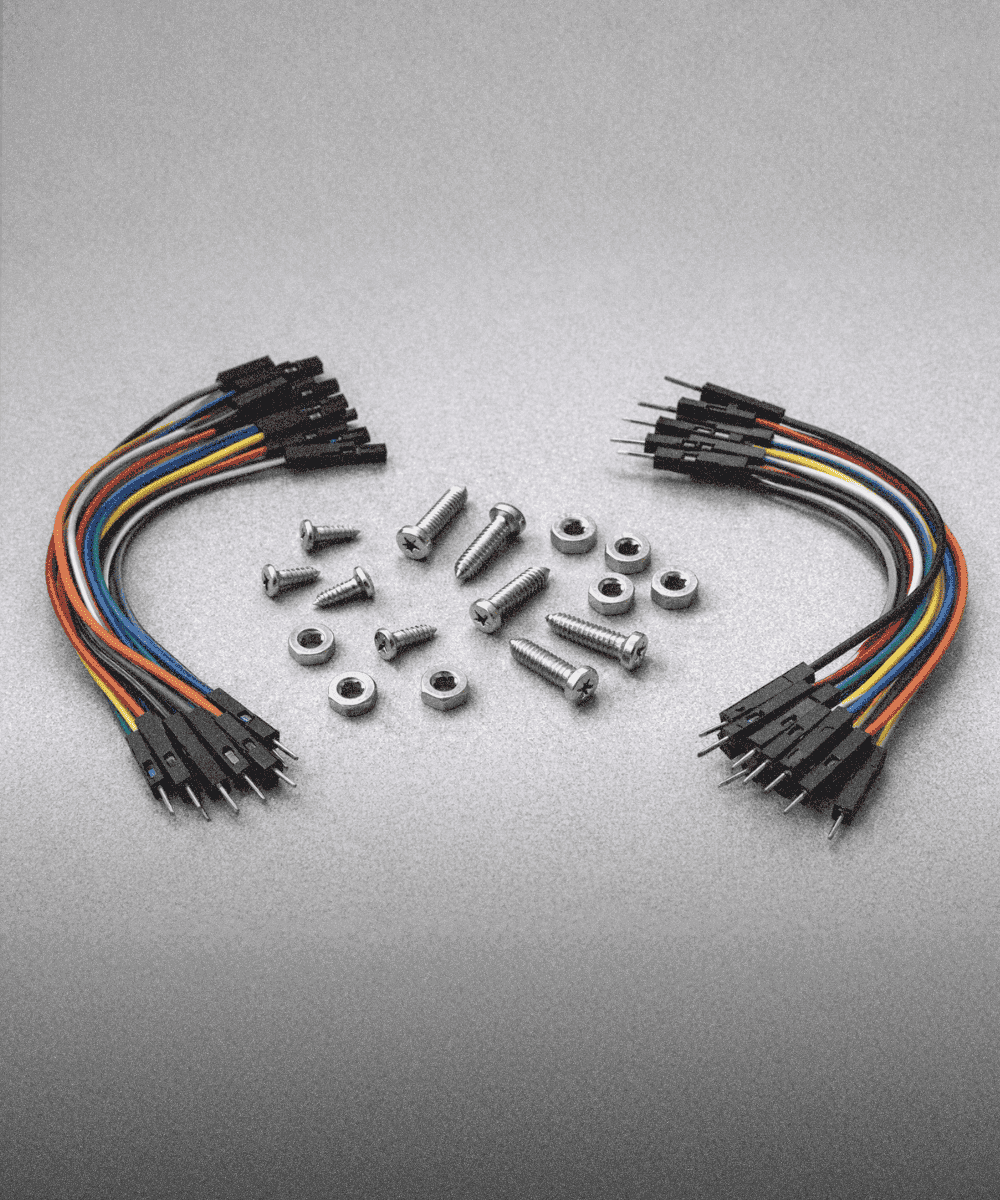
CABLES, SCREWS & FASTENERS
CABLES, SCREWS & FASTENERS
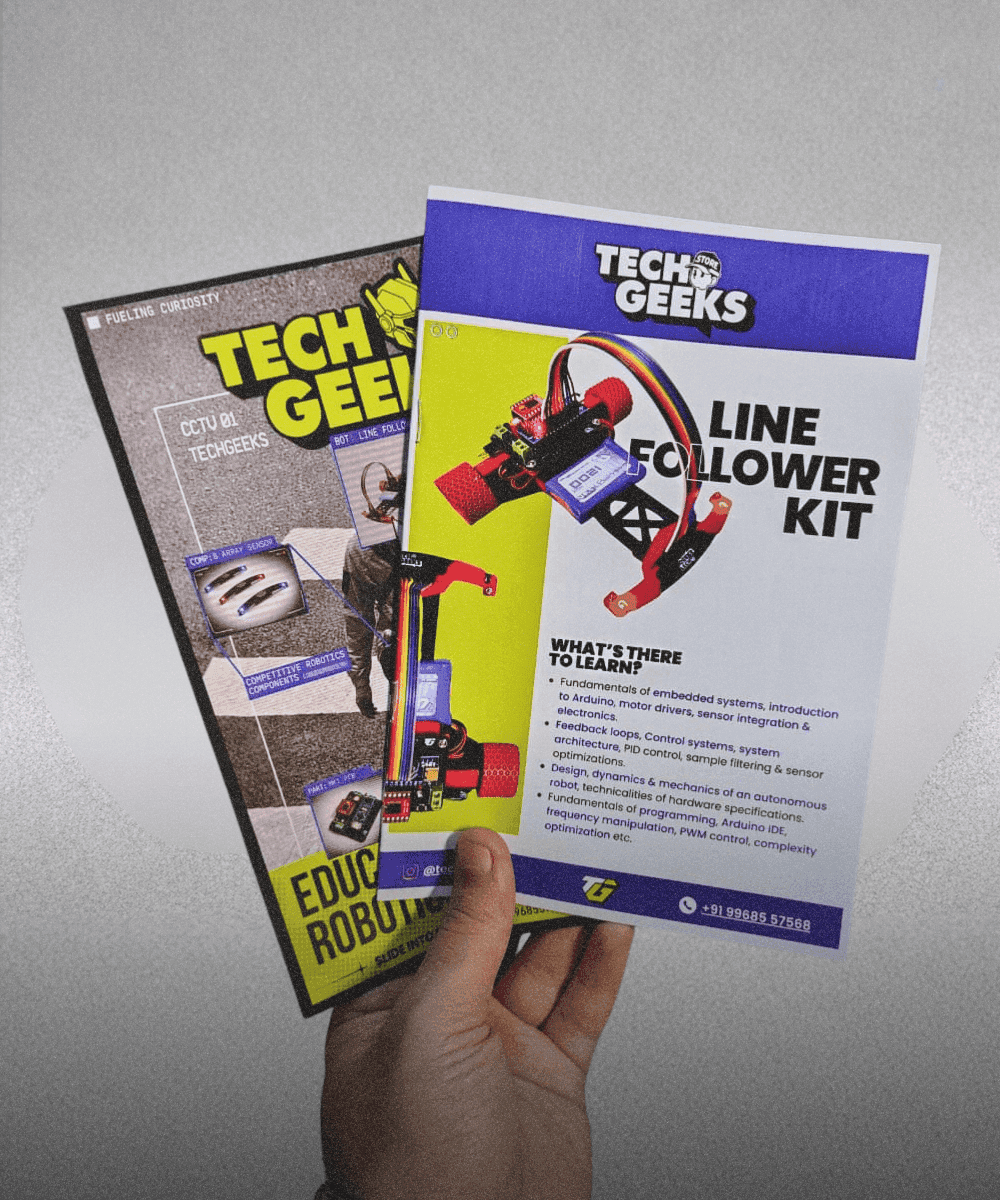
COMPREHENSIVE GUIDE
COMPREHENSIVE GUIDE, CODE REPOS & INTERACTIVE MANUAL.
PRODUCT SPECS
DESCRIPTION
TECHNICAL
SPECIFICATIONS
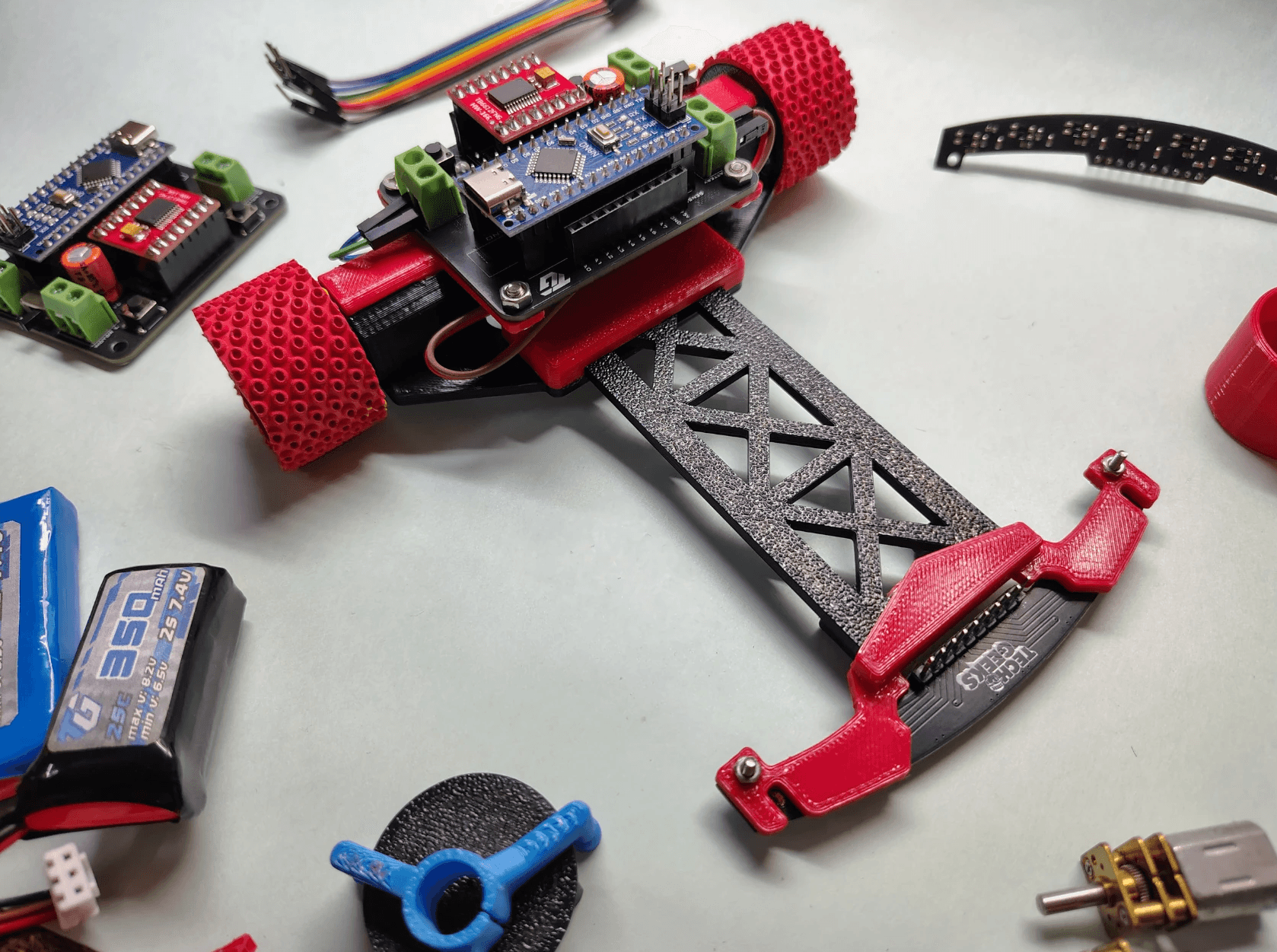
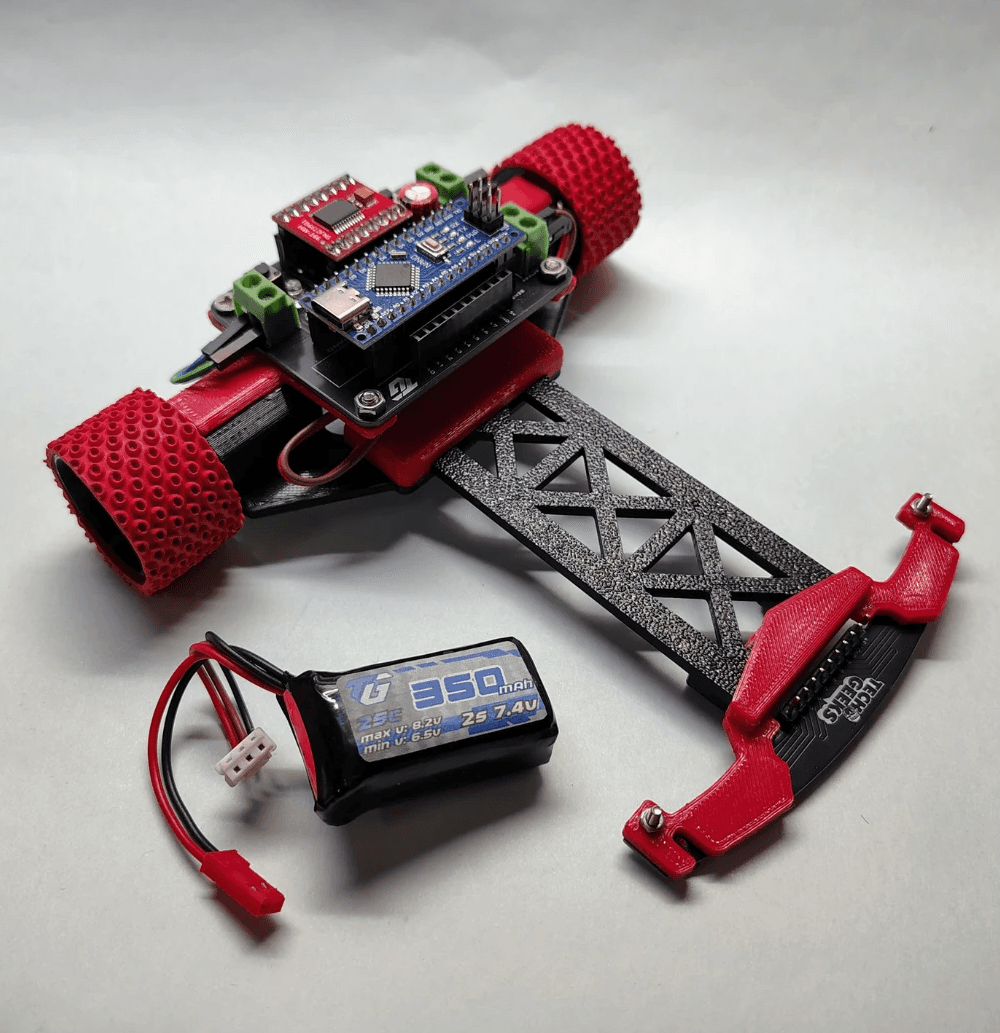
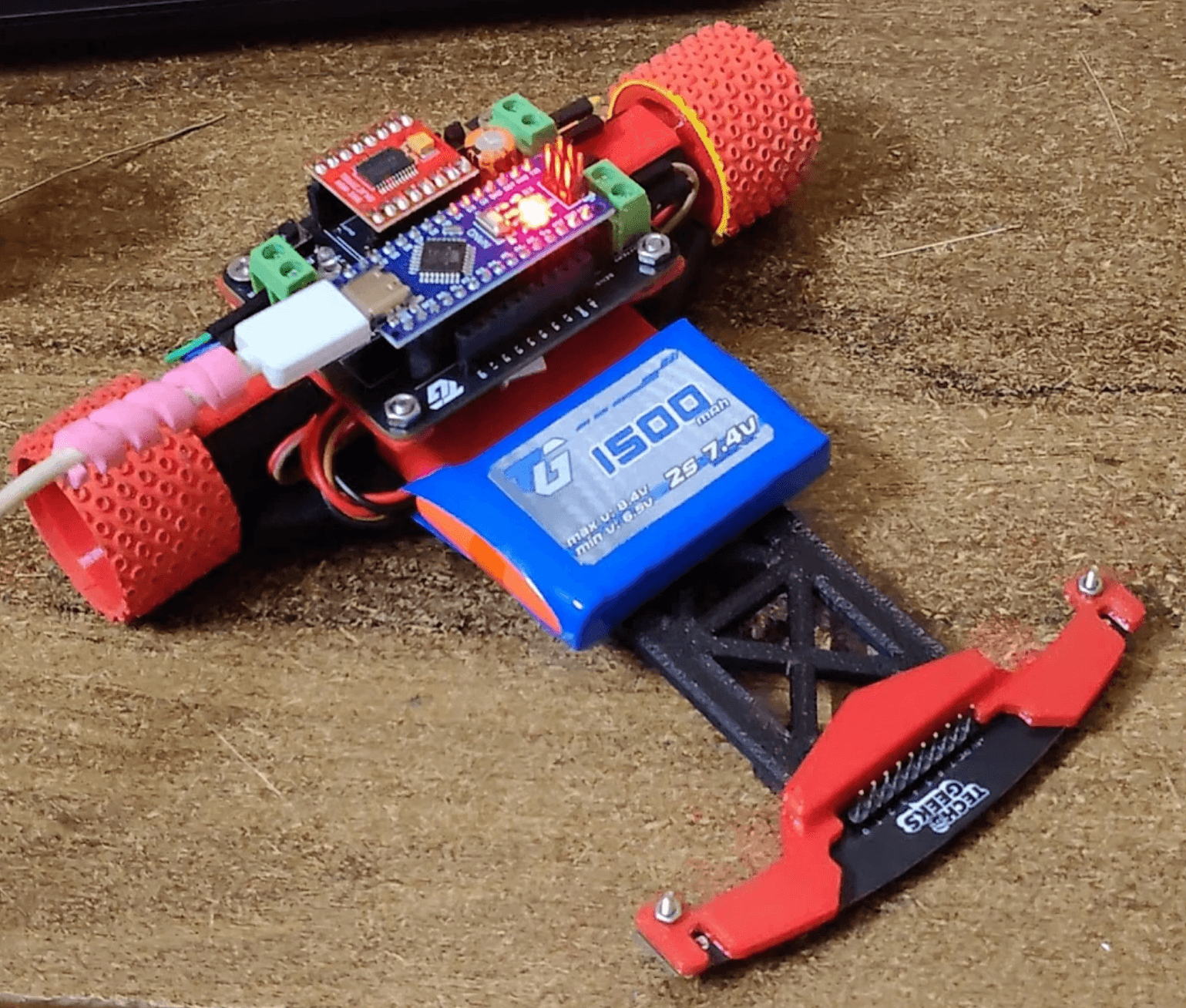
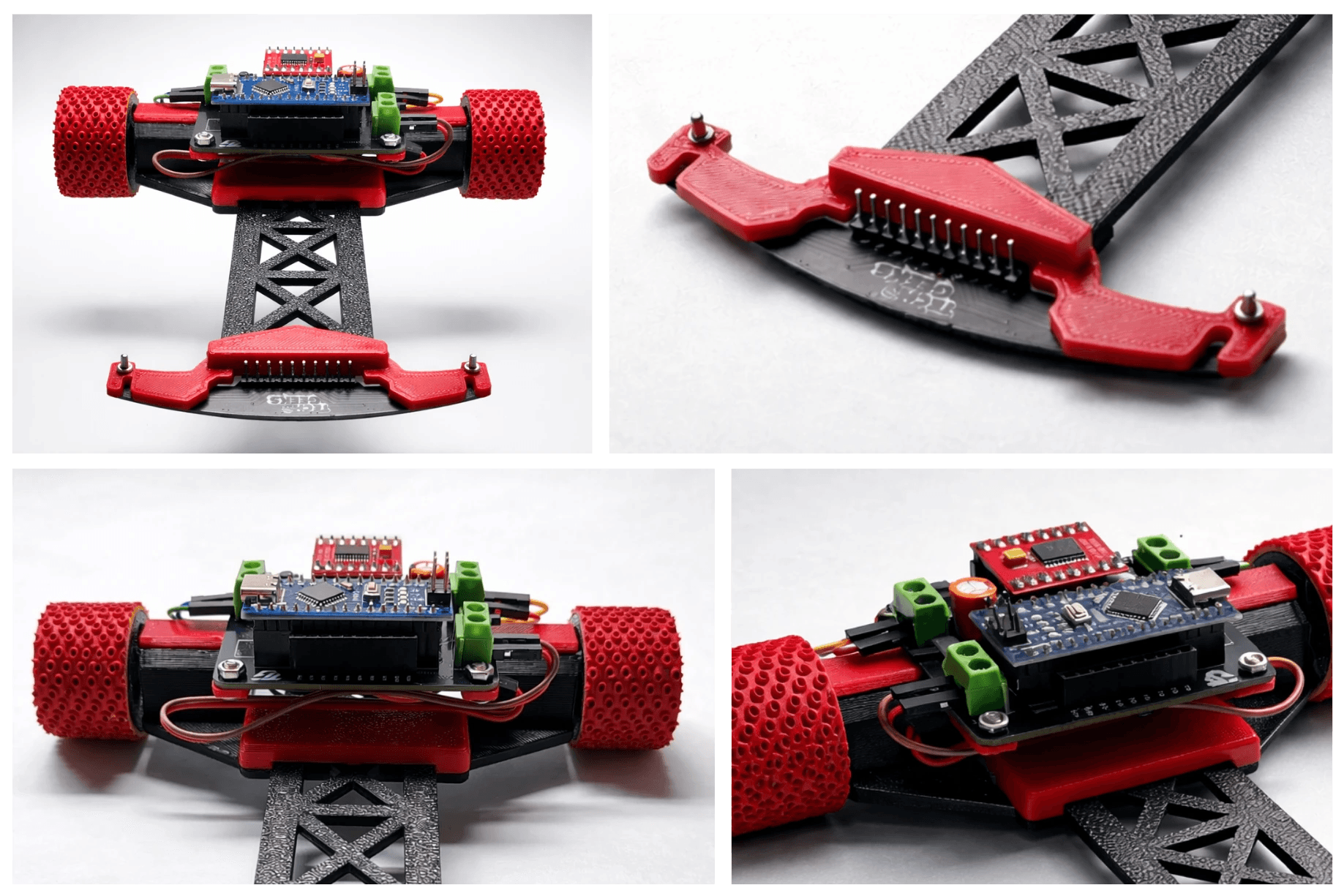
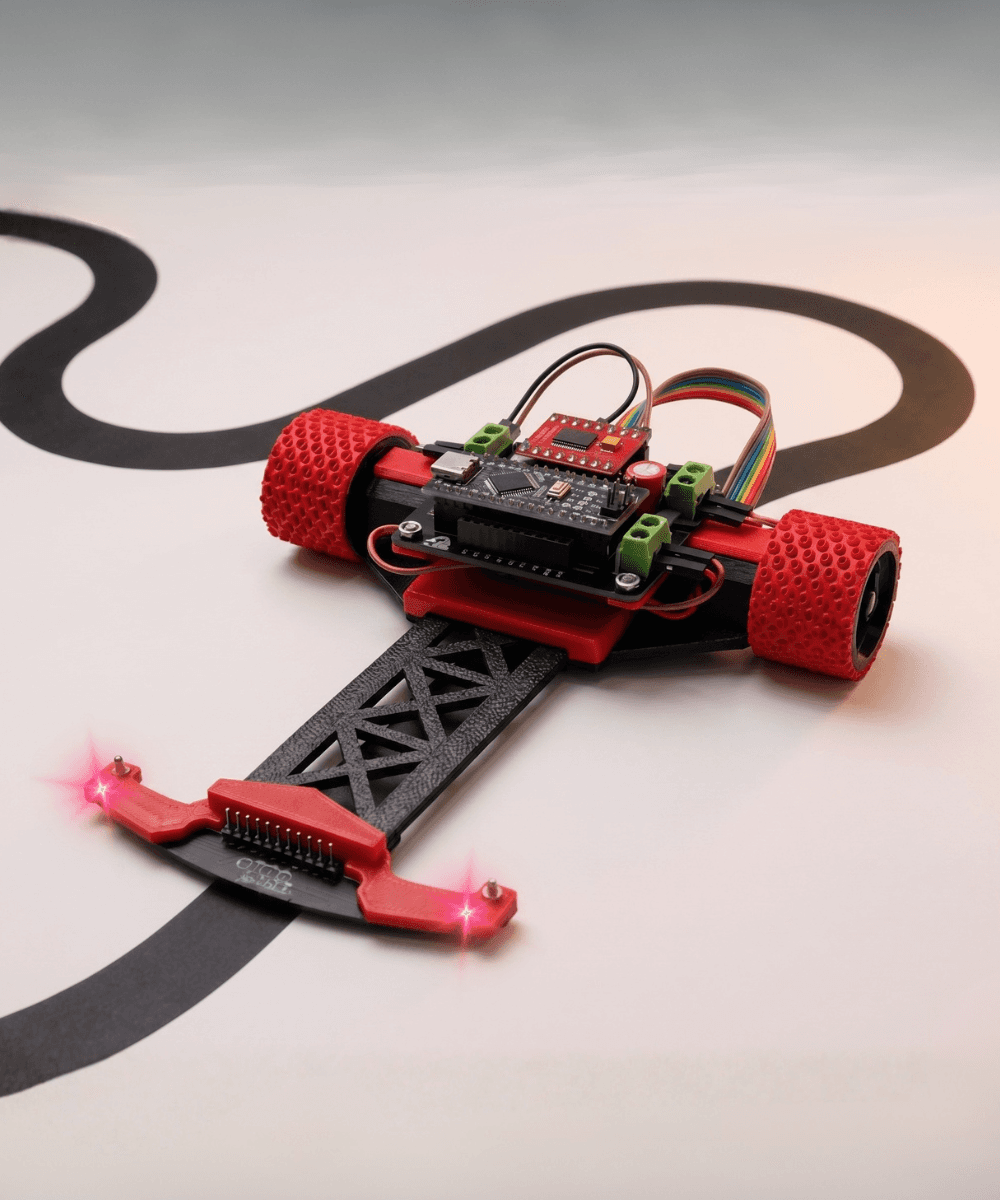
✦ The Mark 1 LFR is a compact, high performance line follower robot built around the ATmega328P microcontroller using the Arduino Nano platform operating at 16 MHz and 5V logic level.
✦ The robot is powered by a 2S LiPo battery (7.4V). A dual channel TB6612FNG motor driver enables efficient PWM based speed control of the high RPM DC N20 gear motors, providing smooth acceleration and sharp turning capability.
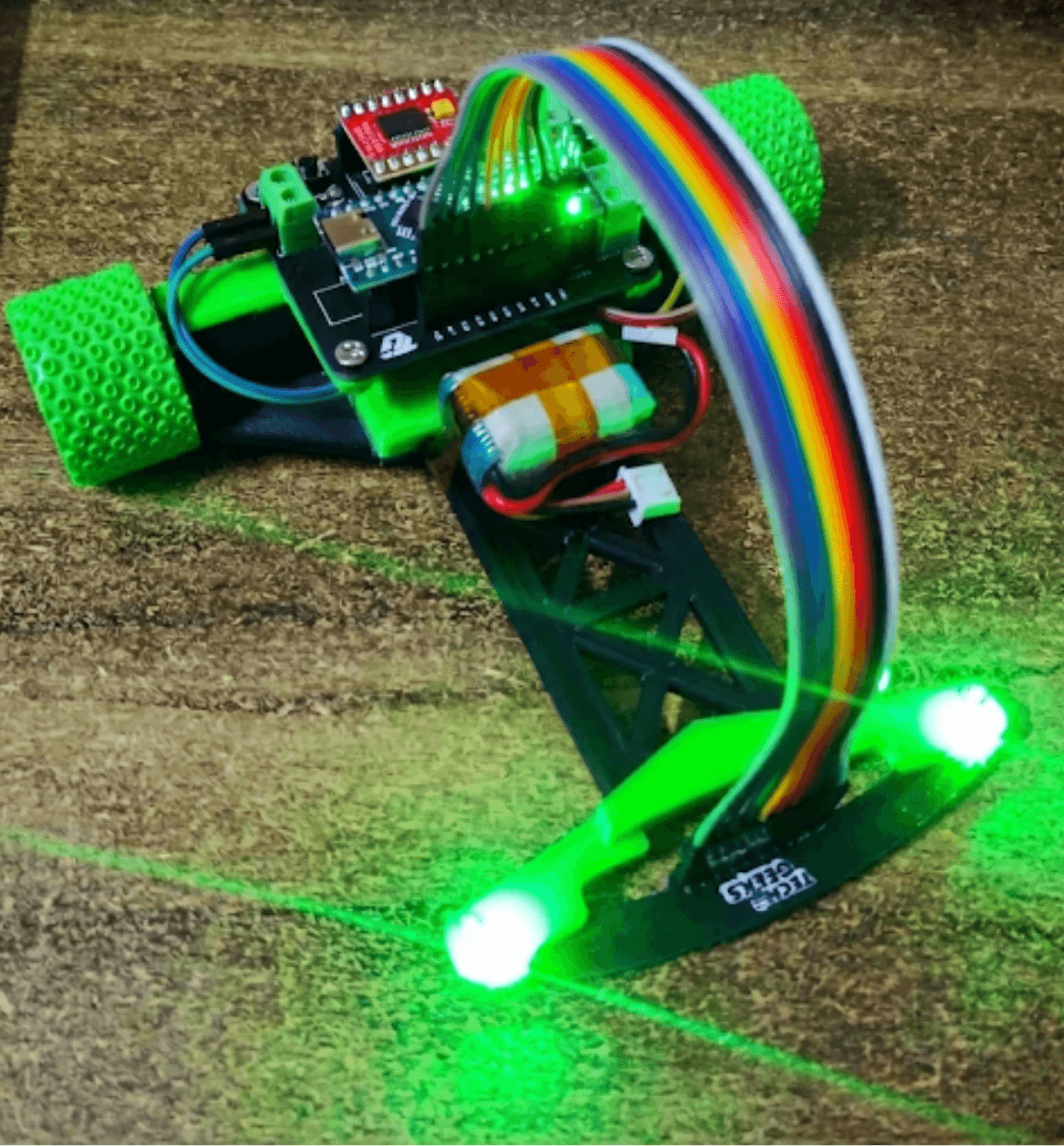
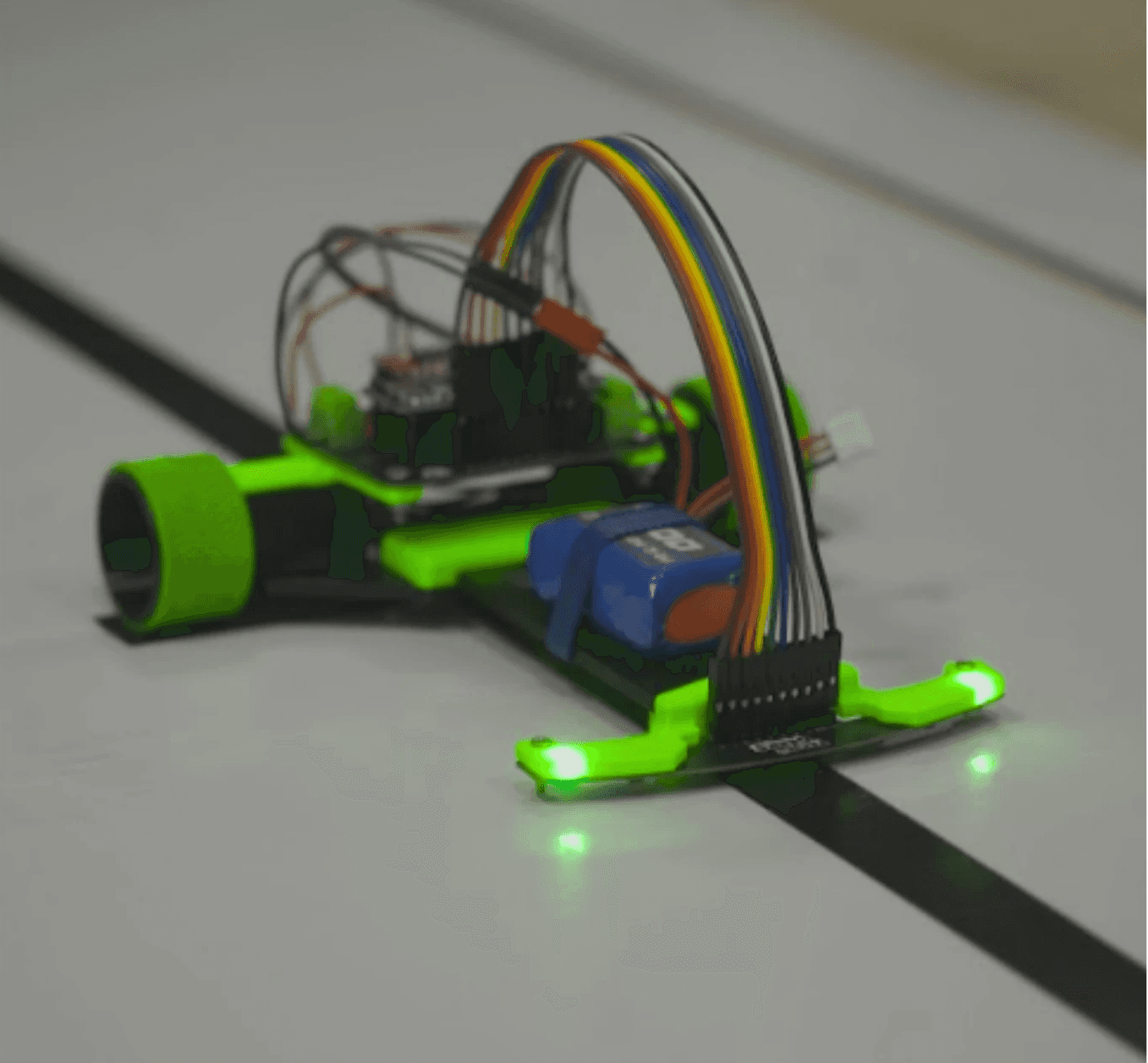
✦ It features an 8 Channel IR Sensor Array (ARC8) to detect contrast between black and white surface. It is equipped with 2 wheel drive system combined with high traction rubber wheels that provide stability.
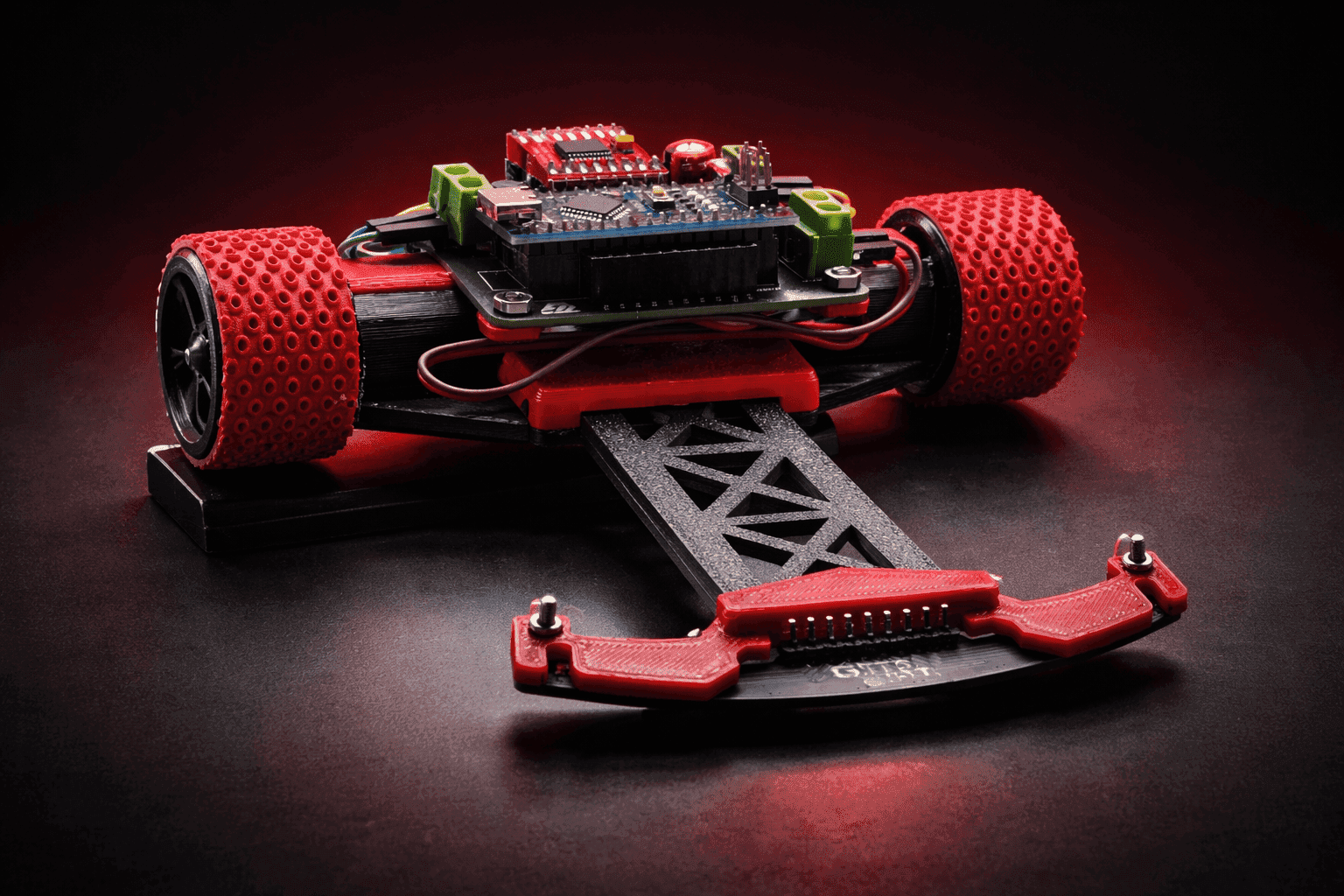
✦ The frame is a lightweight 3D printed chassis (PLA+/PETG). With an approximate weight of 140–160 grams and compact dimensions, it is optimized for speed, agility and competition performance that make the Mark 1 both beginner friendly and competition ready.
SOFTWARE AND
PROCESSING
✦ The Mark 1 LFR follows a structured control flow defined in setup() and loop(). On startup, the system waits for the left button press to initiate calibrate(). During calibration, the robot rotates using motorControl(100, -100) while recording minimum and maximum sensor readings.
✦ After pressing the right button, the robot enters run mode. In loop(), the readSensors() function continuously reads and normalizes sensor data, identifying active sensors and determining whether the line is detected (lineFound).
✦ If the line is present, move() calculates positional error using weighted sensor inputs. A PID correction (using kp and kd) generates PIDoutput, which adjusts speedA and speedB around the defined robotSpeed. Speeds are constrained before being applied through motorControl().
✦ If the line is lost, recovery logic applies directional correction based on the last known error. This ensures stable tracking, smooth steering, and responsive real time control.
COLOR, MATTE
AND FINISH
Available in four color options, the robot features a precision 3D-printed matte chassis paired with high-traction rubber wheels and cleanly integrated components, delivering a cohesive, durable, and competition-ready finish.
*All the media present are for visual representation purposes only, actual product may slightly vary.

PRODUCT SPECS
DESCRIPTION
TECHNICAL
SPECIFICATIONS
✦ The Mark 1 LFR is a compact, high performance line follower robot built around the ATmega328P microcontroller using the Arduino Nano platform operating at 16 MHz and 5V logic level.
✦ The robot is powered by a 2S LiPo battery (7.4V). A dual channel TB6612FNG motor driver enables efficient PWM based speed control of the high RPM DC N20 gear motors, providing smooth acceleration and sharp turning capability.
✦ It features an 8 Channel IR Sensor Array (ARC8) to detect contrast between black and white surface. It is equipped with 2 wheel drive system combined with high traction rubber wheels that provide stability.
✦ The frame is a lightweight 3D printed chassis (PLA+/PETG). With an approximate weight of 140–160 grams and compact dimensions, it is optimized for speed, agility and competition performance that make the Mark 1 both beginner friendly and competition ready.
SOFTWARE AND
PROCESSING
✦ The Mark 1 LFR follows a structured control flow defined in setup() and loop(). On startup, the system waits for the left button press to initiate calibrate(). During calibration, the robot rotates using motorControl(100, -100) while recording minimum and maximum sensor readings.
✦ After pressing the right button, the robot enters run mode. In loop(), the readSensors() function continuously reads and normalizes sensor data, identifying active sensors and determining whether the line is detected (lineFound).
✦ If the line is present, move() calculates positional error using weighted sensor inputs. A PID correction (using kp and kd) generates PIDoutput, which adjusts speedA and speedB around the defined robotSpeed. Speeds are constrained before being applied through motorControl().
✦ If the line is lost, recovery logic applies directional correction based on the last known error. This ensures stable tracking, smooth steering, and responsive real time control.
COLOR, MATTE
AND FINISH
Available in four color options, the robot features a precision 3D-printed matte chassis paired with high-traction rubber wheels and cleanly integrated components, delivering a cohesive, durable, and competition-ready finish.
*All the media present are for visual representation purposes only, actual product may slightly vary.
Specifications.
Specifications.
Hardware Specs
Motors
6v 600 rpm D-shaft N20 motors
Battery
2S (7.4v), 300-1000 mAh Li-Po battery
Control Board
Multi-Peripheral versatile robot controller
Wheels
30 mm diameter x 20 mm length ± 10%
Chassis
3D printed PLA / PETG
Sensor
8 channel Analog IR sensor array
MCU & Driver
Arduino nano @16MHz & Dual Channel TB6612FNG driver
Hardware Specs
Motors
6v 600 rpm D-shaft N20 motors
Battery
2S (7.4v), 300-1000 mAh Li-Po battery
Control Board
Multi-Peripheral versatile robot controller
Wheels
30 mm diameter x 20 mm length ± 10%
Chassis
3D printed PLA / PETG
Sensor
8 channel Analog IR sensor array
MCU & Driver
Arduino nano @16MHz & Dual Channel TB6612FNG driver
*All the specifications listed are retrieved from relevant sources and are subject to vary
Power & Energy
Sensor
Regulated 5V supply
Motors
Peak ~0.8A current @6V
Robot Controller Board
On-board 5V regulator for dedicated power
Motor Driver
2S battery for motor voltage + 5V logic supply
Power Source De-Coupling
On-board capacitors for smooth power delivery
Safety
Reverse voltage protection
Power & Energy
Sensor
Regulated 5V supply
Motors
Peak ~0.8A current @6V
Robot Controller Board
On-board 5V regulator for dedicated power
Motor Driver
2S battery for motor voltage + 5V logic supply
Power Source De-Coupling
On-board capacitors for smooth power delivery
Safety
Reverse voltage protection
*The circuitry and components are powered with a compact and powerful Li-Po battery. The battery capacity rating is subject to vary according to available stock, it may vary from 300 to 1000 mAh. Li-Po batteries pose accidental risks, please refer to the 'Battery Safety Guide' for safe usage.
Dimensions
Weight
~ 150 gms (subject to vary)
Size
140 mm B x variable L x 50 mm H
Dimensions
Weight
~ 150 gms (subject to vary)
Size
140 mm B x variable L x 50 mm H
*The length between wheels and sensor is adjustable to fine tune the performance. Overall dimensions lie well within the safe limits for various competitions.
HOW IT WORKS
GUIDED KITS
HOW IT WORKS
GUIDED KITS

SCIENCE BEHIND THE BOT
CONCEPTS
WHAT'S
TO LEARN
01
Embedded Systems & Electronics
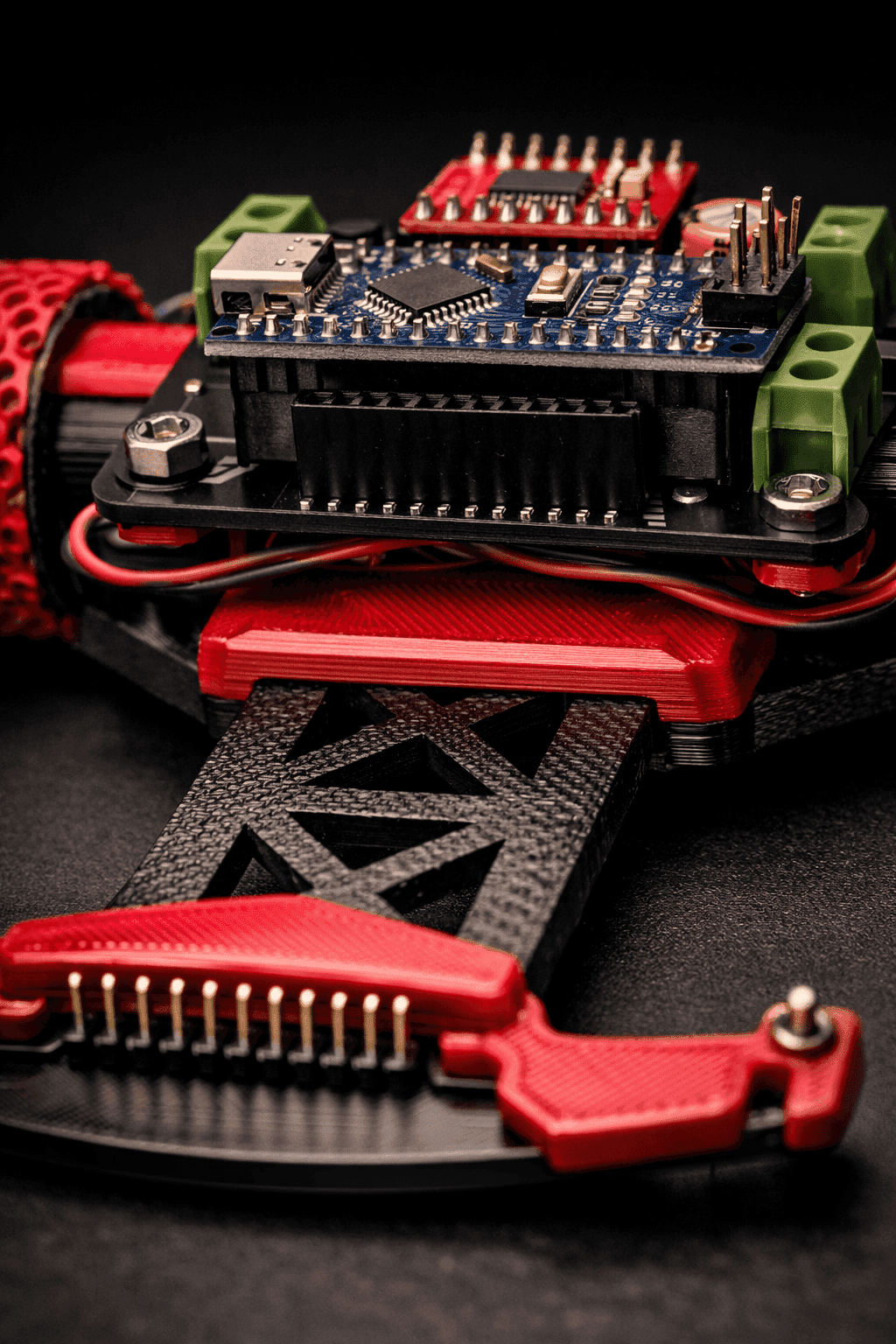
Learn how embedded systems work by building with Arduino, integrating sensors, driving motors, and understanding the electronics that connect everything together.
02
Control Systems & Optimization
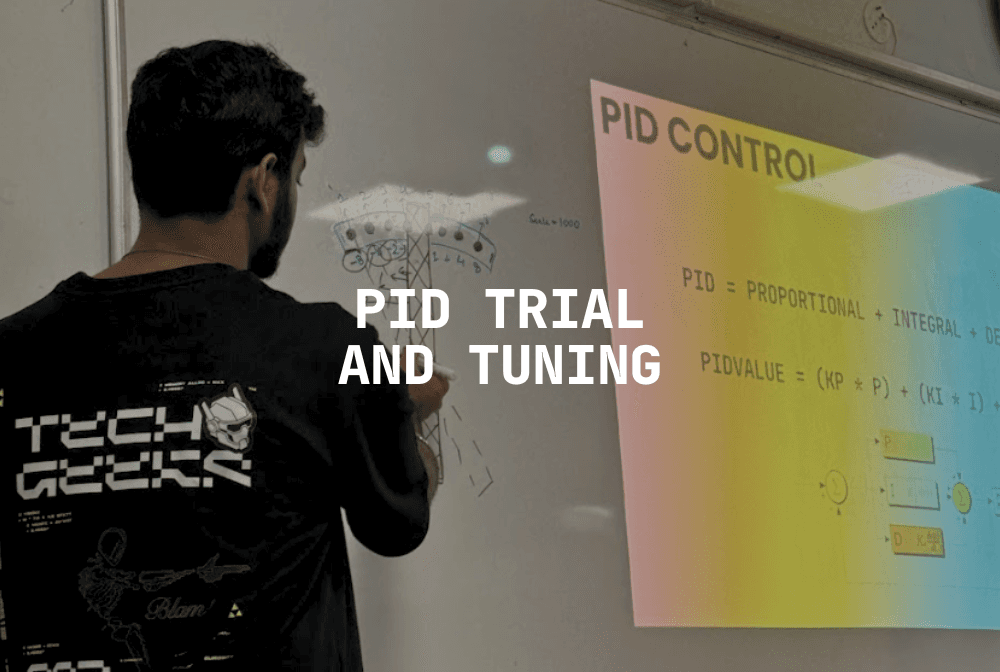
Understand how feedback driven systems behave, how PID control is applied in real scenarios and how sensor data is refined and optimized for stable performance.
03
Robotics Mechanics & Design
Explore how autonomous robots are designed, how their mechanics and dynamics affect movement, and how hardware choices influence overall behavior.
04
Programming & Execution
Develop core programming skills using the Arduino IDE, working with timing, frequency and PWM control while learning how to write efficient, optimized code.
SCIENCE BEHIND THE BOT
CONCEPTS
WHAT'S
TO LEARN
Embedded Systems & Electronics
Learn how embedded systems work by building with Arduino, integrating sensors, driving motors, and understanding the electronics that connect everything together.
Control Systems & Optimization
Understand how feedback driven systems behave, how PID control is applied in real scenarios and how sensor data is refined and optimized for stable performance.
Robotics Mechanics & Design
Explore how autonomous robots are designed, how their mechanics and dynamics affect movement, and how hardware choices influence overall behavior.
Programming & Execution
Develop core programming skills using the Arduino IDE, working with timing, frequency and PWM control while learning how to write efficient, optimized code.
© THE TECHGEEKS EXPERIENCE 好 奇 心
user insights and Reviews
Reviews (0)
PRODUCT
user insights and Reviews
Reviews (0)
FAQS
GOT MORE QUESTIONS?
Clarifying doubts
Before your journey Begins with
Real Process.
01
What is Mark 1?
02
Do I need any prior experience to use Mark 1?
03
Is Mark 1 suitable for academic projects or competitions?
04
Can TechGeeks products be used for schools or institutions?
05
What is Techgeeks?
06
Do you offer support after purchase?
07
Do you ship across India?
08
How long does it take to ship?
09
Do you ship internationally / overseas?
FAQS
GOT MORE QUESTIONS?
01
What is Mark 1?
02
Do I need any prior experience to use Mark 1?
03
Is Mark 1 suitable for academic projects or competitions?
04
Can TechGeeks products be used for schools or institutions?
05
What is Techgeeks?
06
Do you offer support after purchase?
07
Do you ship across India?
08
How long does it take to ship?
09
Do you ship internationally / overseas?
MOVE CURSOR TO EXPLORE
PEACE OUT
TAP TO EXPLORE
PEACE OUT
why choose us
FIN.
At Techgeeks, we believe that great innovation starts with right people and reliable tools. We are committed to delivering the highest quality hardware to ensure nothing stands between you and your creation.
Thank you for choosing us to fuel your curiosity. Cheers to building the future.
Arduino line follower Robotics kit for Students, Builders, college students and more - India
The Mark 1 Line Follower Robot is a complete Arduino-based robotics kit designed specifically for students preparing for robotics competitions, engineering lab projects, and embedded systems learning. It features the ATmega328P microcontroller via Arduino Nano, an 8-channel analog reflectance IR sensor array (ARC8), a TB6612FNG dual-channel motor driver, two 6V 600 RPM D-shaft N20 gear motors, 30mm high-traction rubber wheels, and a lightweight 3D-printed PLA/PETG chassis — all powered by a 2S 7.4V LiPo battery with on-board 5V regulation and power decoupling. Available as an unassembled DIY kit or a pre-assembled ready-to-run bot, in four matte color options.The Mark 1 LFR uses a PID (Proportional-Integral-Derivative) control algorithm for smooth, competition-grade line tracking. The firmware includes a calibration routine, weighted sensor error calculation, and real-time PID correction across both motor channels. Open-source code is available via the TechGeeks GitHub repository, along with a comprehensive build guide covering assembly, wiring, code upload, and tuning. Whether you're learning about embedded systems for the first time or optimizing for speed and accuracy at a robotics competition, Mark 1 is the platform built for that journey.If you're searching for a line follower robot kit in India that goes beyond the standard 3-sensor beginner kits sold on Amazon or Flipkart — a kit that teaches real control theory, uses competition-standard components, and comes with proper documentation — the Mark 1 is your answer. It ships across India with free delivery on orders above ₹1999, and is used by students from IITs, NITs, VIT, SRM, Amrita, and hundreds of other colleges competing at Techfest, Robocon, Smart India Hackathon, and college-level tech fests nationwide.
The Mark 1 is TechGeeks' entry-level competition line follower robot kit, designed for engineering students, college makers, and first-time robotics competitors. Built around the Arduino Nano (ATmega328P, 16 MHz), it uses an 8-channel analog IR sensor array (ARC8) for precise line detection, a TB6612FNG dual motor driver for smooth PWM speed control, and 600 RPM N20 gear motors for responsive steering. The lightweight 3D printed PLA/PETG chassis weighs just 140–160 grams, making it nimble enough for competition tracks. It runs on a compact 2S 7.4V LiPo battery with on-board power decoupling and reverse voltage protection.Who Is It For: Engineering students in their 1st–3rd year, robotics club members prepping for Techfest, Robocon, e-Yantra, or college tech fests, and any maker who wants to learn embedded systems hands-on rather than through tutorials alone.Why Mark 1: Most entry-level robot kits in India use cheap BO motors, fixed sensor spacing, and basic analog comparators. Mark 1 uses a custom PCB controller (Blueprint 01), an 8-channel analog reflectance IR array with calibration routines, and a PID-based firmware with full source code — the same architecture used in competitive bots, just at an accessible entry price.
embedded systems project kit, Arduino Nano ATmega328P robot, IR sensor reflectance array, PID control robotics, N20 gear motor robot, LiPo battery robot kit, open source robotics India, DIY robot kit engineering student, autonomous robot India
why choose us
FIN.
At Techgeeks, we believe that great innovation starts with right people and reliable tools. We are committed to delivering the highest quality hardware to ensure nothing stands between you and your creation.
Thank you for choosing us to fuel your curiosity. Cheers to building the future.
Arduino line follower Robotics kit for Students, Builders, college students and more - India
The Mark 1 Line Follower Robot is a complete Arduino-based robotics kit designed specifically for students preparing for robotics competitions, engineering lab projects, and embedded systems learning. It features the ATmega328P microcontroller via Arduino Nano, an 8-channel analog reflectance IR sensor array (ARC8), a TB6612FNG dual-channel motor driver, two 6V 600 RPM D-shaft N20 gear motors, 30mm high-traction rubber wheels, and a lightweight 3D-printed PLA/PETG chassis — all powered by a 2S 7.4V LiPo battery with on-board 5V regulation and power decoupling. Available as an unassembled DIY kit or a pre-assembled ready-to-run bot, in four matte color options.The Mark 1 LFR uses a PID (Proportional-Integral-Derivative) control algorithm for smooth, competition-grade line tracking. The firmware includes a calibration routine, weighted sensor error calculation, and real-time PID correction across both motor channels. Open-source code is available via the TechGeeks GitHub repository, along with a comprehensive build guide covering assembly, wiring, code upload, and tuning. Whether you're learning about embedded systems for the first time or optimizing for speed and accuracy at a robotics competition, Mark 1 is the platform built for that journey.If you're searching for a line follower robot kit in India that goes beyond the standard 3-sensor beginner kits sold on Amazon or Flipkart — a kit that teaches real control theory, uses competition-standard components, and comes with proper documentation — the Mark 1 is your answer. It ships across India with free delivery on orders above ₹1999, and is used by students from IITs, NITs, VIT, SRM, Amrita, and hundreds of other colleges competing at Techfest, Robocon, Smart India Hackathon, and college-level tech fests nationwide.
The Mark 1 is TechGeeks' entry-level competition line follower robot kit, designed for engineering students, college makers, and first-time robotics competitors. Built around the Arduino Nano (ATmega328P, 16 MHz), it uses an 8-channel analog IR sensor array (ARC8) for precise line detection, a TB6612FNG dual motor driver for smooth PWM speed control, and 600 RPM N20 gear motors for responsive steering. The lightweight 3D printed PLA/PETG chassis weighs just 140–160 grams, making it nimble enough for competition tracks. It runs on a compact 2S 7.4V LiPo battery with on-board power decoupling and reverse voltage protection.Who Is It For: Engineering students in their 1st–3rd year, robotics club members prepping for Techfest, Robocon, e-Yantra, or college tech fests, and any maker who wants to learn embedded systems hands-on rather than through tutorials alone.Why Mark 1: Most entry-level robot kits in India use cheap BO motors, fixed sensor spacing, and basic analog comparators. Mark 1 uses a custom PCB controller (Blueprint 01), an 8-channel analog reflectance IR array with calibration routines, and a PID-based firmware with full source code — the same architecture used in competitive bots, just at an accessible entry price.
embedded systems project kit, Arduino Nano ATmega328P robot, IR sensor reflectance array, PID control robotics, N20 gear motor robot, LiPo battery robot kit, open source robotics India, DIY robot kit engineering student, autonomous robot India


DIY GUIDED KIT
Build the bot from scratch with the parts included. (soldering iron, fasteners, wires may be needed)
ASSEMBLED BOT
Receive a ready to run robot, assembled before dispatch. (battery charger, tools may be needed)
Close


